
Two Wellington Entrepreneurs of the 'Thirties
The Murray Fullers II
Mary Murray Fuller
ANN CALHOUN
Edwin Murray Fuller died in February 1933. Mary Murray Fuller, 'his companion in his wanderings, and an ever steadfast sharer in his ambitions, a sympathiser in his dreams' stepped in and continued as an 'art distributor' with the same drive and enthusiasm he had shown.
Together the Murray Fullers had made contact with Royal Academicians and other academic artists in Britain: gaining the personal friendship of many. With the assistance of these artists, Mrs Fuller organised exhibitions of 'contemporary' British art in 1935, 1936 and 1940. Work from those exhibitions can be found in the collections of the major public galleries in New Zealand. Mrs Fuller was on the Council of The New Zealand Academy of Fine Arts, and after the opening of the New National Art Gallery in 1936 on the Committee of Management for the Gallery.
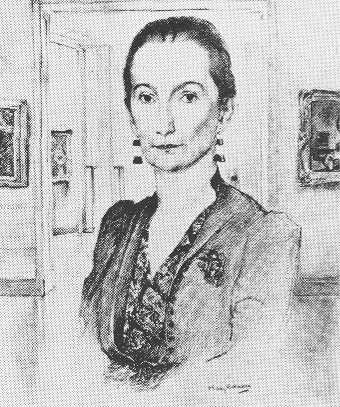
H. LINLEY RICHARDSON
Mary Murry Fuller c1940
In August 1933, Mrs Fuller made the first of a number of small gifts of academic work: at this time to the Academy; later to the National Art Gallery. Although she may have stayed in Wellington for the Academy's annual exhibition in October, in which work by her husband was exhibited, by the following March she had been in Sydney for two months making arrangements for an exhibition there of British art.
Mrs Fuller could be assured that exhibitions similar to those the Murray Fullers had mounted earlier would still be welcomed in New Zealand from sentiments expressed by H.H. Tombs, the editor of Art in New Zealand, in both the March and June 1934 issues. Discussing the evolution of a national artistic style, he expressed the view that, until a national consciousness had been aroused, art in New Zealand had been necessarily imitative. Increased opportunities for New Zealand artists to compare their work with that of 'leading' artists overseas had been provided by a 'pioneer' such as Murray Fuller. The educational impact of the E. Murray Fuller exhibitions on New Zealand artists and the public had been excellent'.
What seems not to have been studied or questioned was the restraining effect of exhibitions of overseas art set up as exemplary models but limited to work selected within narrow parameters. For Wellington audiences, the substantive experience of overseas art for a number of years had been determined by the E. Murray Fuller exhibitions. In 1934, the Empire Art Loan Collections Society lent an exhibition of 250 works of contemporary British art from private collections in Britain. The exhibition was seen in Dunedin, Christchurch, Auckland and Wanganui, but not in Wellington.
On 1 March 1935, a fourth E. Murray Fuller exhibition of oils, watercolours and etchings opened at the Academy in Wellington. The exhibition, it was acknowledged in Art in New Zealand, had been gathered together with 'the assistance of the president of the Royal Academy, Sir William Llewellyn, Dame Laura Knight and Messrs. Philip Connard, R.A., Arnesby Brown, R.A., and Campbeil Taylor': All the best-known British painters of the period are represented. Among these are Dame Laura Knight, Glynn Philpot, R.A., Frank Brangwyn, R.A., Professor Wilson Steer, Walter Sickert, R.A., Philip Connard and W. Russell Flint. R.A. and Sydney Thompson. Local connoisseurs have united to praise the variety and general high quality of work exhibited.
As with many of the works in previous Murray Fuller exhibitions, 'each of the works presented has been selected in the studio of the artist, some even have been coaxed from the possession of the painter only by insistent persuasion'. In his catalogue introduction, A.D. Carbery continued: Mrs. Murray Fuller, by friendly contact with leading British artists, has been able to accomplish a difficult task so giving us a renewed opportunity to revise our experience of the art of the Homeland.
This exhibition, as with the others 'aroused keen interest among art lovers in Wellington, and was undoubtedly of great educational value to art students and to the public'. The Academy purchased Dieppe, a Philip Connard oil (350gns). In an interview with the Evening Post on 21 January, 1935, Mrs Fuller placed her own, attitudes towards art on record:
In her opinion, said Mrs. Murray Fuller, those who had broken away from the conventions of art and had instituted ultra-modern movements, were making no progress ... There was now in progress a swing back to old traditions, but art had benefited by the upheaval.
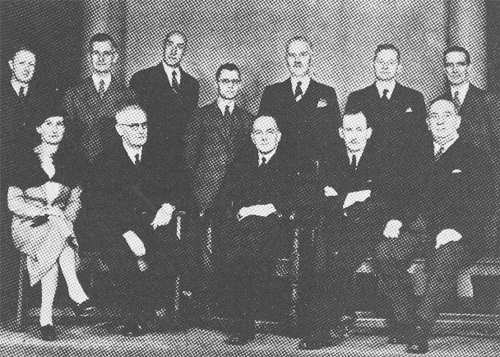
The council of the
New Zealand Academy
of Fine Arts 1938
(Mary Murray Fuller seated)
Mrs Fuller held that lack of attention to drawing skills had meant that there were few who could take the place of older established artists. 'Too many had started off with the idea that drawing was unnecessary'. She felt that these skills were now coming to be seen as important to the marrying of art and industry.
After Wellington, the exhibition went to Christchurch, where it was opened by Sydney Thompson, now returned to New Zealand and president of the Canterbury Society of Arts.
In December 1935, Mrs Fuller was in London, taking part in discussions between representatives of the Board of Trustees of the National Art Gallery (and Dominion Museum) and officials of the Empire Art Loan Collections Society. The result was the British Empire Loan Collection: Seventy?-one works for the most part lent by the National and Tate Galleries, illustrating two hundred years of British art. Roland Hipkins wrote:
there is no part of the British Empire where it is more acceptable than in New Zealand - acceptable because it is British, not solely because it is art.
This was one of five exhibitions shown at the new National Art Gallery to celebrate its opening on 1 August, 1936. Also, as one of the opening exhibitions, was the 'Murray Fuller Collection': 221 works including paintings, watercolours, drawings, etchings, engravings, lithographs and a few pieces of sculpture. It had been concluded in London that it would be desirable to have an exhibition of modern art among the opening exhibitions. As the work in the exhibition would be for sale, it was calculated that the exhibition costs would be covered. The decision was no doubt encouraged by the advice that Mrs Fuller would have the assistance of Sir William Llewellyn, Sir Herbert Hugh Stanton and Sir William Reid Dick in selecting the exhibition. Again quoting Roland Hipkins:
Although it does not include the work of some of the British artists whose work is vital and characteristic of present-day painting, it contains examples of the work of Sir D.Y. Cameron, Glyn W. Philpot, Sir C.J. Holmes, Arnesby Brown, Philip Connard, Harold and Laura Knight, Sir George Clausen, Wilson Steer, Sir William Nicholson, Frank Brangwyn and James McBey. The presence of the above artists' work ensures for it a standard of artistic attainment which cannot but have an enlightening educational value. The work also of Ethel Walker, W.J. Leech, Margaret Fisher Prout, C.W.R. Nevinson, Beatrice Bland, Harry Morley and Guy Kortright present aspects of contemporary British art which is being increasingly appreciated in New Zealand.
From this time until she resigned as the National Art Gallery's London representative in 1947, Mrs Fuller was fully involved in all Gallery undertakings, and, therefore, Academy activities. The Academy was now permanently housed in the Museum and Gallery complex and, as part of the agreement, the Academy had gifted its collection to the Gallery. Mrs Fuller was on the Academy Council (with the exception of the year 1941) continuously from 1936 to 1945. She was nominated for the Committee of Management for the National Art Gallery at the end of 1936, becoming one of seven members of a total of nine on the Committee who were appointed by the Academy. It appears that she replaced Nelson Isaacs on the Committee and on the Hanging and Educational subcommittees. The Committee also included D.A. Ewen, A.D. Carbery, Nugent Welch and Sydney Thompson. From the opening exhibition, (from the 'Murray Fuller Collection') the Gallery purchased five works. D.A. Ewen, also president of the Academy, and his wife gifted Dame Laura Knight's Self Portrait, an oil at 450 guineas (see Art New Zealand 23, p.21).
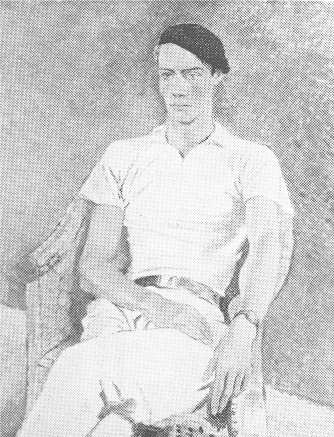
GLYN PHILPOT
Man in White 1934
oil on canvas
(collection of The
National Gallery, Wellington)
During the opening exhibitions period, Mrs Fuller lectured on the 'Murray Fuller Collection'. Then, in 1937, she lectured on reproductions purchased by the Gallery with a Carnegie Corporation grant (Christopher Perkins, in 1930, and others, had endorsed the use of quality reproductive prints as a means of teaching art appreciation). Early in 1938, at her suggestion, the lighting system used in the Gallery was improved.
In 1938, the Board of Trustees for the Gallery agreed to mark New Zealand's Centennial by mounting the Centennial Exhibition of International Art. Mrs Fuller was appointed as their representative in Europe, to arrange with artists for the loan of work for the exhibition. She agreed to organise all aspects of the exhibition, including the terms of sale under which works were to be made available. She wrote to a Dutch gallery director:
As it is difficult to obtain good examples of contemporary art on loan, it was decided that all work on view will be on sale. It is hoped that the National Art Gallery and other Public Galleries of New Zealand and the public will purchase works from this exhibition.
On her return, she was to hang and publicise the exhibition and monitor sales. Her travelling expenses were covered, and for her services during the exhibition she was to receive a commission rated on the Board's commission. With the backing of the Board, it was thought that Mrs Fuller's skills would ensure the success of the project and a much larger and more representative exhibition. Soon after her return, a complimentary telegram to this effect was received from Sir Edward Lutyens, president of the Royal Academy.
Mrs Fuller left Wellington on the Akaroa on 30 December, 1938. During her absence, she was re-nominated for the Gallery's Committee of Management, and W.S. Wauchop was nominated for the first time. Of the 562 works collected with a sterling value of £30,000, all but forty-seven were by British artists. Seven works were on loan from the Tate Gallery; and there were other loans and a number of gifts to the Gallery. The forty-seven works not by British artists were by Belgian or French artists. Mrs Fuller was not allowed to take work out of Holland, and a proposed trip to Sweden had to be abandoned - both because of the pending war. In fact, she left England some weeks before war was declared: although she saw sufficient of what was to come for her letters and lectures to reflect her experience.
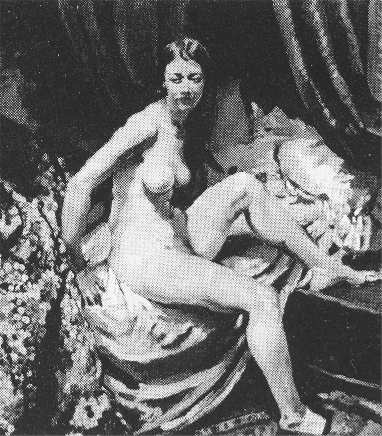
PHILIP CONNARD
Nude
oil on canvas
(collection of the
Auckland City Art Gallery)
The position of the Gallery - mounting an exhibition of work by European artists at a time which was essentially one of national celebration - found many objectors. In the June 1939 issue of Art in New Zealand, H.H. Tombs charged the Gallery:
it is clear that our National Gallery, in its wisdom, has on this occasion turned itself into a commercial organisation for the purpose of selling European work, and has sent an experimental saleswoman, who is herself one of the Management Committee, to England to carry the scheme through. And they are going to sell this work in competition with the work of our own artists, whose show (the New Zealand Academy of Fine Arts Annual Exhibition) is to be opened at the same time as the overseas exhibition, and to run for a period of three months "concurrently", as the judge says when a prisoner has to serve two sentences at the same time! Aren't we making ourselves rather ridiculous in doing this? ... The loan idea seems the rational and normal procedure for such exhibitions.
It was perhaps an understandable, if unnecessary, display of national sensitivity to have assumed that the work in the Academy exhibition might suffer in comparison with the imported work. But Tombs did make the point that the function of the Gallery was to educate and stimulate, and loan exhibitions made available by the Empire Loan Collections Society were being declined by the Gallery because of the Centennial Exhibition. He wryly suggested that the Management Committee may have been 'bustled into this ill-advised expedition against their better judgement?'
Considering that Tombs was quite blunt in his other criticism, he might also have asked why control of the work to be selected for such an important exhibition was left entirely in the hands of one person, who had acknowledged her conservative tastes, and whose contacts overseas were, with the occasional exception, a small group of people within academic circles.
With the outbreak of war some consideration was given to cancelling the exhibition: but in view of the money already spent, it was decided to carry on. The exhibition opened on 10 November, 1939. Mrs Fuller's letters regretted that circumstances had meant fewer visitors than expected, and that sales had not been helped by the increase in taxes. To obtain sales, liberal discounts were given to purchasers (over 50% in some instances). A further exhibition at a later date was suggested as a possibility.
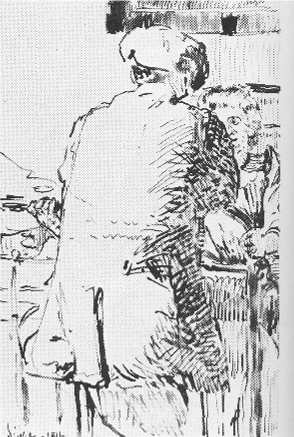
WALTER RICHARD SICKERT
The Conversation 1914
pen and ink
(collection of the
Auckland City Art Gallery)
Of course, Mrs Fuller's letters also dealt at length with the war and showed the attributes of New Zealanders so far removed from the realities of the situation. In a letter to Sir Arnesby Brown of 10 June, 1940, she repeated thoughts present in many of her letters of a similar date:
It is all very worrying and disturbing. What a relief to know that so many men were removed from Flanders safely. Thrilling reading, but a great loss of life and destruction of material. The Allies must win.
This country is so isolated that it is hard for people to realise the sufferings and hardships in Europe. Knowing the countries I visualise the destruction. We are sending men and food to England, but one wishes one could do I more to help. Today news came that the flying ace from this town, "Cobber" Kain has been killed. We were all thrilled with his exploits. The young men from New Zealand who are in the air force have given a good account of themselves.
The exhibition was initially on display until 12 May, 1940. It was not then sent back to England. Apart from the obvious risks involved, the prohibitive cost of insurance was an important factor. During the exhibition and until the exhibition was sent back to England, Mrs Fuller's advice was sought on which works to purchase for the Gallery's collection. This involved taking work from storage from time to time for the Committee to consider for purchase. In 1940, Mrs Fuller herself gave the Gallery a watercolour by Ronald Gray: A Cold Day at Villars (£18.18.0); and, in 1941, an oil by H. Davis Richter, Tranquility at Polperro (£31.10.0).
The National Centennial Exhibition of New Zealand art - a loan exhibition organised under the auspices of the Department of Internal Affairs by Dr A.H. Mclintock - was not shown in Wellington until 1942, at the end of its national tour. Art in New Zealand noted in the September 1940 issue that the exhibition was on show at the Auckland City Art Gallery: 'Mrs Murray Fuller is now in charge'. The intended draw for the Centennial International Art Exhibition in Wellington, 'the large oil-painting of the Coronation of King George VI and Queen Elizabeth by Frank Salisbury' was on display for part of the Auckland exhibition.
On 1 May, 1941, both Mrs Fuller and W.S. Wauchop were nominated for a further three years on the Committee of Management. In June 1942, the Museum, Gallery and Academy had to vacate the Buckle Street building: it was occupied by the military until 1949. Mrs Fuller was employed to supervise storage and removal of the National Collection and Centennial Collection. From then until the building was re-occupied, the Gallery and the Academy shared an exhibition area and office space in the D.I.C. Building, Wellington. Mrs Fuller was appointed Education Officer by the Gallery in April, 1943, and she toured the Wellington region in this capacity.
On 17 March, 1944, a selection of work from the Centennial International Art Collection went on display at the D.I.C. exhibition area. Mrs Fuller and W.S. Wauchop had selected the pictures exhibited and had made all the arrangements for the exhibition:
This selection comprises oil paintings, watercolours, drawings and etchings by renowned artists such as P. Wilson Steer, O.M.,N.E.A.C., Henry TonkS, N.E.A.C., Dame Ethel Walker, N.E.A.C., Sir Arnesby Brown, RA, Sir Waiter Russell, R.A., W. Russell Flint, RA, P.R.W.S., Dame Laura Knight, RA, Robert Austin, A.R.A., John Nash, A.R.A., Roland Oudet, Albert Marquet, Isidore Opsomer, Albert Saverys, Jacques Maes, and others.
Mrs Fuller continued as the Gallery's Education Officer, and gave lunchtime lectures at the D.I.C. She also assisted the Academy with their D.I.C. exhibitions, and with sales. W.S. Wauchop was to declare later that she had been 'indefatigable in her efforts to sustain the interest of the public in art matters'. In 1944, from the Centennial Exhibition, Mrs Fuller made a gift of an oil by Sir Arnesby Brown, The White Frost (£85.0.0), to the Gallery.
The exhibition started its return journey to England in December 1945. Mrs Fuller was engaged to travel to England and return unsold work to its owners. In an interview with the Listener in January 1941, she had explained that she had her own 'personally trained packer' in New Zealand 'in whom she reposes implicit trust' and in London 'her own special packers'. In a letter of 27 May, 1946, Alex Reid and Lefevre advised that there was not even a chip on any of the frames' of the work returned to them. As many of the works being returned would have had heavy ornate gilt and gesso frames, the commendation of professionalism implicit in the Lefevre letter bears out Mrs Fuller's claim that 'the packing of pictures ... is another under-estimated business. In reality, it is an art in itself'.
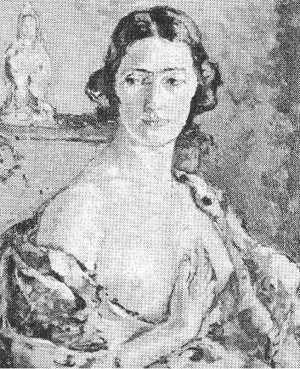
DAME ETHEL WALKER
Portrait of a Woman
oil on canvas
(collection of the
Auckland City Art Gallery)
In her report on the exhibition, Mrs Fuller noted that 202 works had been sold and 362 returned; £6,366 had been realised from the 1939?40 exhibition and £6,345 subsequently; attendance at Buckle Street totalled 57,150: but no check had been made of numbers visiting the exhibition at the D.I.C., although the down?town venue had been popular. She concluded that the 'educational benefits to New Zealand' from the exhibition would be 'very great and far reaching'.
In England, Mrs Fuller became the National Art Gallery's Honorary Representative, recommending exhibitions and purchases. She may have decided to live permanently in England because of a growing rift between herself and the Committee of Management. At the end of 1947, Mrs Fuller wrote an angry letter to the Committee of Management over their declining to purchase a work she had recommended. She thus severed her connections with the Gallery. Earlier in 1947, she had gifted a work by Mark Fisher, R.A. (1841-1923), father of Margaret Fisher Prout, to the Gallery (The Wayside Pool, catalogue value 500 guineas), and in 1946, pottery by expatriate New Zealander Keith Murray and Phoebe Stabler.
After her departure for England, Mrs Fuller was made a life-member of the Academy. W.S. Wauchop in his Reminiscences spelt out the debt that he felt Wellington artists and the public had to the Murray Fullers. Mrs Fuller's name disappeared from the chronicles of the Wellington art scene. She did not die in New Zealand. As she was no longer listed as a life-member of the Academy in the 1976 Annual Exhibition catalogue, she probably died late in 1975 or early in 1976.
In the Listener interview referred to above, the social world that Mrs Fuller inhabited was described:
A little white card was inserted above the doorway announcing that Mrs Murray Fuller was at home ... At the time I was interested in Mrs Fuller's charming and artistically designed flat. The blinds were drawn against the sunlight, leaving the lounge room swimming in cool shadow. The dominating shades were beige grey and white; an ideal foil for the brilliant canvases that spaced the walls.
One of these paintings, 'an extraordinary study of a street. scene; fascinating but a little bewildering', was a work of Frances Hodgkins. (This may be Market at Concameau, bequeathed to the National Art Gallery bv C. Millan Thompson but previously owned by Mrs Fuller.)
Mrs Fuller talked to the interviewer of the ideals she and her husband had shared; of the expertise required to conduct exhibitions in a professional manner; and of the need to gain the personal confidence of artists before proposing to bring their work to a distant place like New Zealand for exhibition.
Over a quarter of a century, the Murray Fullers had acquired remarkable skills in the handling and distribution of art. Edwin Murray Fuller does, however, seem to have been quicker to accept new developments in art. And the well thought?out layout of the E. Murray Fuller exhibition catalogues suggests that he may have been ahead of his time in the display of work. For her part, Mrs Fuller felt that she had 'a natural flair for hanging pictures': but photographs and the jumbled layout of the catalogue of the 1936 Gallery opening exhibition and the Centennial exhibition are reminiscent of Christopher Perkins's condemnation of the practice of 'fitting everything into a sort of decorator's triumph':
The several works of one artist may be strewn around the place among hostile elements. This is fatiguing to the public, but the committee are not thinking of artists or public - their job is 'the show'.
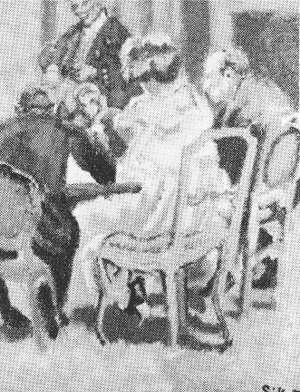
WALTER RICHARD SICKERT
Baccarat, Dieppe
oil on canvas
(collection of the
Auckland City Art Gallery)
Mrs Fuller's 'happy knack of winning ... artists as her friends', a trait also shown by her husband, is the key to understanding Edwin and Mary Murray Fuller.
A letter in a light vein, from Margaret Fisher Prout to her friend Mary Murray Fuller, dated 9 December, 1940, included a description of a Royal Academy exhibition to which the artist had sent two paintings, and the fate of a Steer placed between and visually 'knocked out' by the work of two 'shrieking' female artists, one Beatrice Bland and 'T'other''T'other' artist 'was written to & requested "to rub a little bit of Black over her flowers to tone her painting down" for the benefit of Steer!!!. At the end of the letter, a further comedy is related:
I was rootling around the modern room & was attracted by the strange appearance of one of the paintings... On close examination I found they'd hung it upside down!!!
(To my delight!)
Having had the problem attended to, she added:
I almost wished afterwards ... that I'd left the howler standing.
What price modern Art?
So called?!
Anyway it didn't matter which way up!, possibly it might not have been discovered!
I would like to acknowledge with thanks the following assistance and sources used in preparing this essay:
The staff and facilities of the National Art Gallery, Wellington, Gordon H. Brown, Art in New Zealand, The New Zealand Academy of Fine Arts annual reports and annual exhibition catalogues, E, Murray Fuller exhibition catalogues, The Alexander Turnbull Library and the Evening Post files.