
Glen Jowitt's Dramas of Consent
IAN WEDDE
I once spent an elegaic night watching slides taken by the deceased father of a friend. We saw successive bean-trellises replaced, surly shotgun marriages, the terminally ill old man fading in slides loyally taken by his wife. The show lasted nine hours; it was never boring.
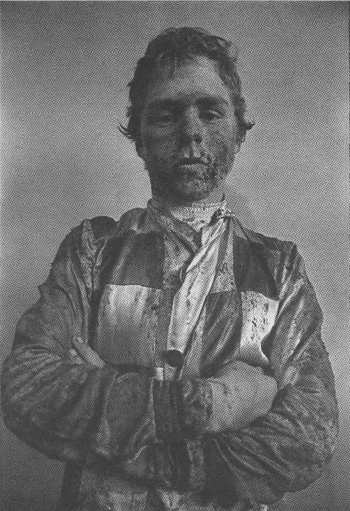
GLENN JOWITT Ashburton - 9 September 1978 from Race Day portfolio, 1978
Its aimless inclusiveness was gathered into themes by quantity and by time, something the professional photographer has to do by editing. This, together with technical involvement, does not totally distinguish the professional from the image - vampire tourist, nor from the mildly aimless domestic recordist.
Take the horribly chic arrogance of the Paris Match photographers at the Pacific Arts Festival in Rotorua. There are few more touristically intrusive images than those in the pages of glossy magazines of consumer ethnology.
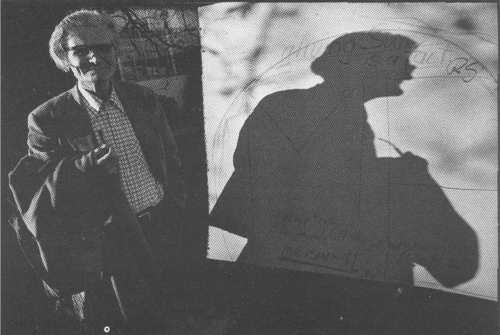
GLENN JOWITT Rudi Gopas, Christchurch 1976 black-and-white photograph
What about photographic images of pornography - genitalia like orchids, limbs like gladwrapped oil?
The wedding party beams at the trade lens: an image of contractual display. Whatever subtext may exist in social anthropology has been rendered uninteresting - content has evaporated into the surface, meaningful only to those preserved beneath its embalming veneer.
If you're into art, get out that box-brownie, don't hold it still. Obtain a polaroid and photograph your feet, only wear jandals or it'll look like David Hockney. Cut out pygmies, wrap catshit in the war-dead, stick the Happiest Day Of Your Life in a mass-produced frame, do do do art art.
How does the photographer with a base in social anthropology manage to edit through such perils? In Glenn Jowitt's work, much of the viewer's pleasure derives from an implicit storyline of involvement in these issues.
The 1976 portrait of Rudi Gopas has the 'subject's' consent. He's standing by a crudely drawn text with his own initials next to it, and his own elegaic shadow across it. The amiable result contains a shadow portrait with an implicit story, references to Gopas's work, to his interest in cosmology. This wry photograph has the inclusiveness of a narrative succession of images.
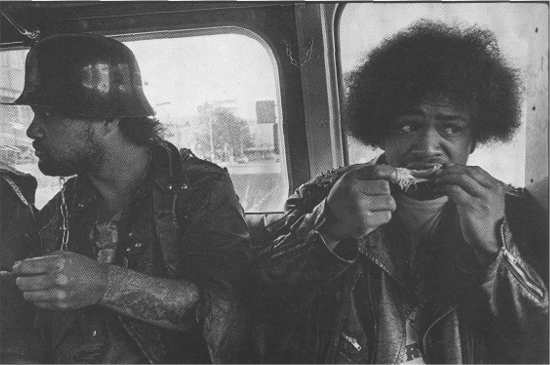
GLENN JOWITT Freddy and Skippy, Christchurch 1979 black-and-white photograph
Jowitt's reputation, however, depends on more contentious subjects: horse-racing, Black Power, the Pacific portfolio. In Race Day (1978) there's the portrait of the apprentice jock (Ashburton - 9 September 1978), the quality of whose consent is quite different from Gopas's affability.
His manner is truculent, an immature pride that resists the stock ingratiating smile. Since this is not a peep shot, we need to read into the photograph the kind of consent revealed in the apprentice's manner, and read the nature of the photographer's provocation of this consent.
And that's what makes the photograph so 'right' as a portrait: not just the content, that edited narrative and its place in the portfolio, but the implied story of the photograph's genesis, the means by which an appropriate response is transformed into an 'in character' portrait image.
Jowitt has chutzpah, and we might feel uneasy about his obtrusions by means available to those concealing their whole presence behind the wee circle of their lens.
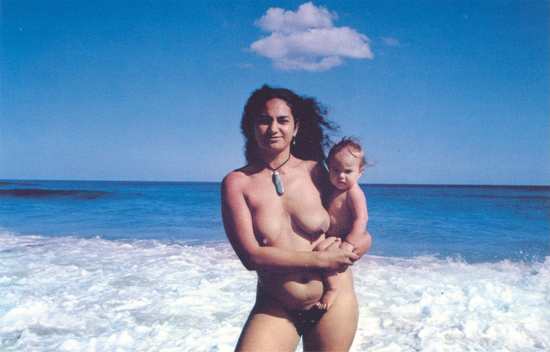
GLENN JOWITT Hinekoia Rotohiko and Lucy Parkinson, Whangarei Ocean Beach 1981 colour photograph
The Black Power portfolio of 1979 contains only one photograph where the consent involves an eye-contact smile: Big Tama. This wary smile has all the stock ingratiation repudiated by the young jock. In the rest of the photographs it's clear that Jowitt's presence was an acknowledged fact: nearly all the work is close, there's no concealment, no wide range of lenses.
And no one looking at the photographer. The shot of Freddy and Skippy eating chicken is aimed directly between them, while they look out different sides of the frame. Again, this implicit drama of the photographer's presence is what enlivens the portfolio. As with the apprentice portrait, it is perfectly appropriate, in this case to the paranoid balance between play and violence.
Most important in Jowitt's massive colour portfolio, Polynesia: Here and There, is the quantity of eye-contact. We might conclude that Jowitt has been upfront with the 'consent problem'. In many Pacific communities, however, it's impolite to look someone in the eye. Does this decorum apply to the lens? Or is the photograph granted an importance that we, technologically blasé, no longer admit?
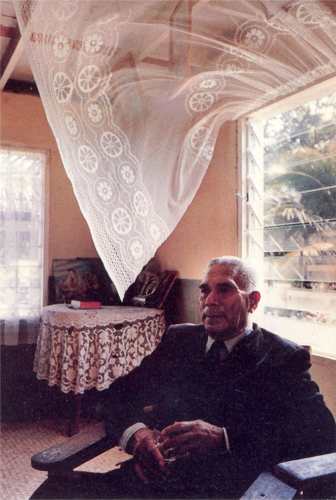
GLENN JOWITT Nuku'alofa, Tongatapu, Tonga 1982 colour photograph
Seeking the appropriate 'reading', we notice the variations. Some of the eye - contact shots take on the melancholy of gaiety greeting its oppressor, particularly in the case of children.
There are portraits, as of the Tongan pastor from Nuku'alofa, where consent is implied, and where chance seems to have transformed atmosphere into revelation: the curtain blowing suggests the wind of spirit as well as the Pacific Trades, nuclear blast as well as salt breath of paradise - the madonna about to be engulfed by this ambiguous, white-hot blast of metaphor. And the pastor sits steadily holding a drink, as oblivious of or accepting of the supernatural as he pretends to be of the camera which has so simply put us there, in the 'atmosphere' of that room.
What kind of consent do we read in the Bed of Hats from Lincoln St., Ponsonby? The question rescues the photograph from quaintness. In the context of such small dramas, the photograph of unloading supplies in Mauke, Cook Islands, where numerous children ignore the photographer's unusually distant perspective, has a tone of mixed celebration and elegy: the pictorial qualities celebrate; but the distance, obliviousness and frozen-motion overlay a documentary nostalgia.
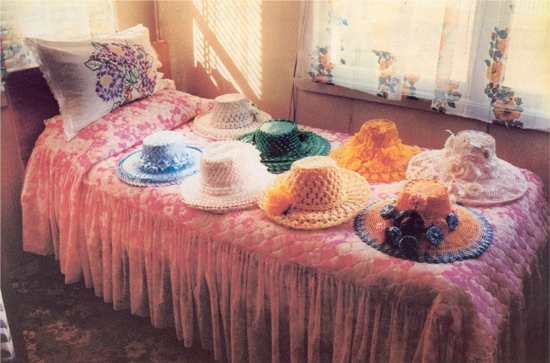
GLENN JOWITT Lincoln Street, Ponsonby 1981 colour photograph
Finally, Lucy and the Cloud (Hinekoia Rotohiko and Lucy Parkinson Whangarei Ocean Beach) manages not only a rescue of beauty from glamour, but a fusion of Jowitt's most interesting qualities. The photograph is unobtrusively a nice composition. There's a story: the Pacific halo of cloud, the madonna image that would still perplex the manifest destinies of modern missionaries.
And what about the 'consent' motif? No dick with a lens stood this lady up. Is that smile 'enigmatic'? How much eye can you see in the 'eye-contact'? In the context of Jowitt's work, with all the Questions he raises about the nature of his presence, this photograph is as much about how and why we are 'there' too as it is about its ostensible subject.
He's chosen a tricky way to go, and so far he's done okay. Let's hope time doesn't give his intuitions the thick skin of professional hardboiled chic. And let's hope he doesn't abandon his social bias for anything more 'creative' - not, at least, until he loses his risky touch for the drama of consent. Once that's gone, he can photograph his feet - they won't care either way.
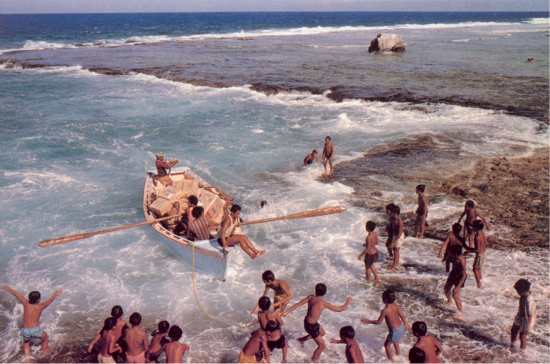
GLENN JOWITT Mauke, The Cook Islands 1982 colour photograph
Glenn Jowitt's Black Power / Christchurch exhibition was sponsored by the Queen Elizabeth II Arts Council; his Polynesia: Here and There was assisted by Polynesian Airlines and Queen Elizabeth II Arts Council.