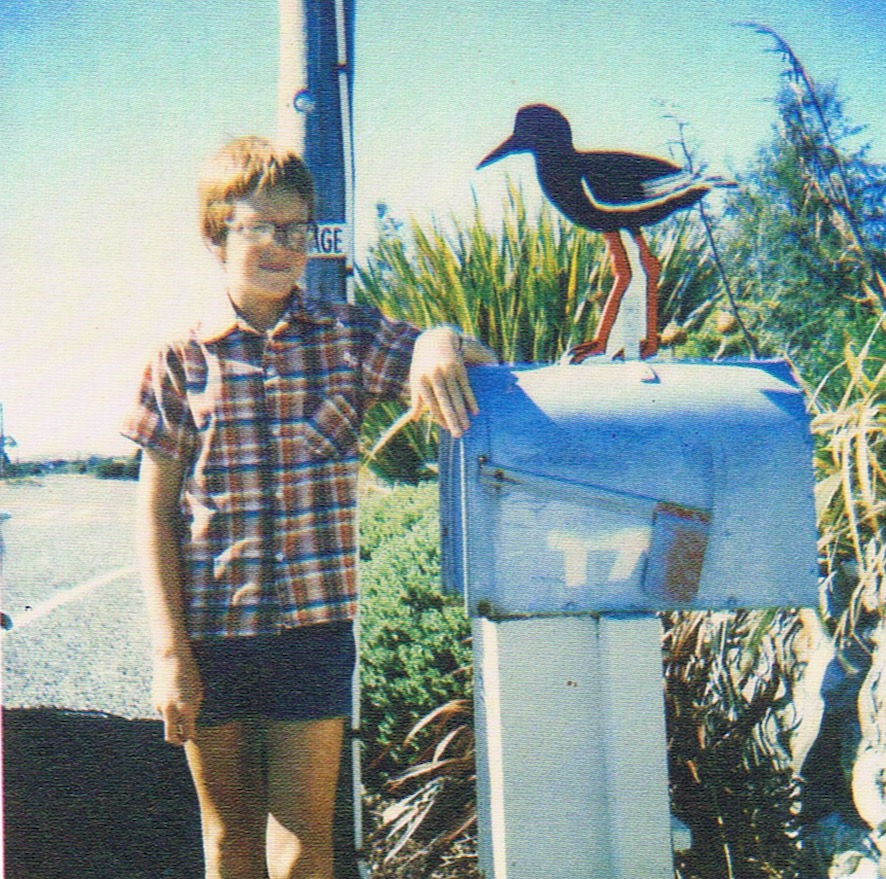
Jeff Thomson
The Farm Meets the Gallery
In recent years Jeff Thomson has brought the New Zealand rural scene into the world of the art galleries. He writes of how he came to create and exhibit his 'mail box art'.
JEFF THOMSON
My interest in walking developed through a lack of rides while hitching through parts of the South Island in 1980. I stopped putting my thumb out when travelling through Arthur's Pass, and walked from Kumara to Wainihinihi. I enjoyed this so much that I started walking more and more. At the time I was living at Portobello, out on the Otago Peninsula, and decided to walk from Dunedin to Christchurch for my brother's wedding.
That 13-day journey included territory I'd travelled over many times previously by vehicle. Everything was so different: the road, the countryside—every corner turned was a new experience. The normally insignificant became important—painted road-markings, road-marker posts, fences and related attachments, weathered road signs, livestock stud signs and mailboxes. I took many photographs on this walk, several of mailboxes, but it was not until afterwards that I became specifically interested in them.
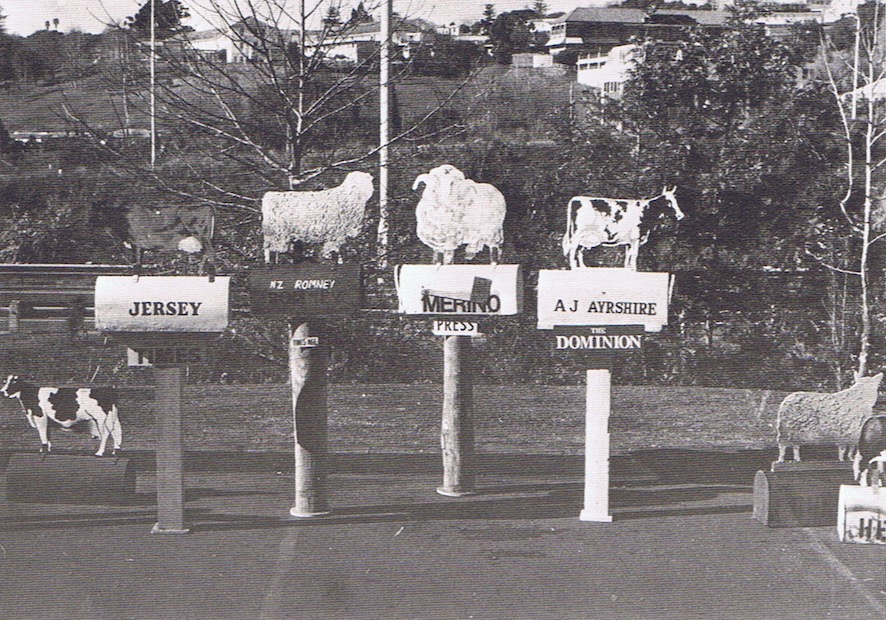
I spent five days walking through the countryside north of Auckland with the particular aim of looking at rural mailboxes. I photographed over two hundred, no two being alike. Unlike its urban counterpart, the rural mailbox displays names not numbers. They are stencilled, sprayed, hand-painted, written, painted over again, new names over old. In addition to the owner's names, there are often newspaper name-plates—those used in rural delivery—attached to the box or supporting structure. Areas can be distinguished by their newspaper name-plates: e.g. Press (Christchurch); Times-Age (Wairarapa); Northland Age (Kaitaia). Later, I began to collect newspaper name-plates and mail-boxes from derelict houses, incorporating them into my work.
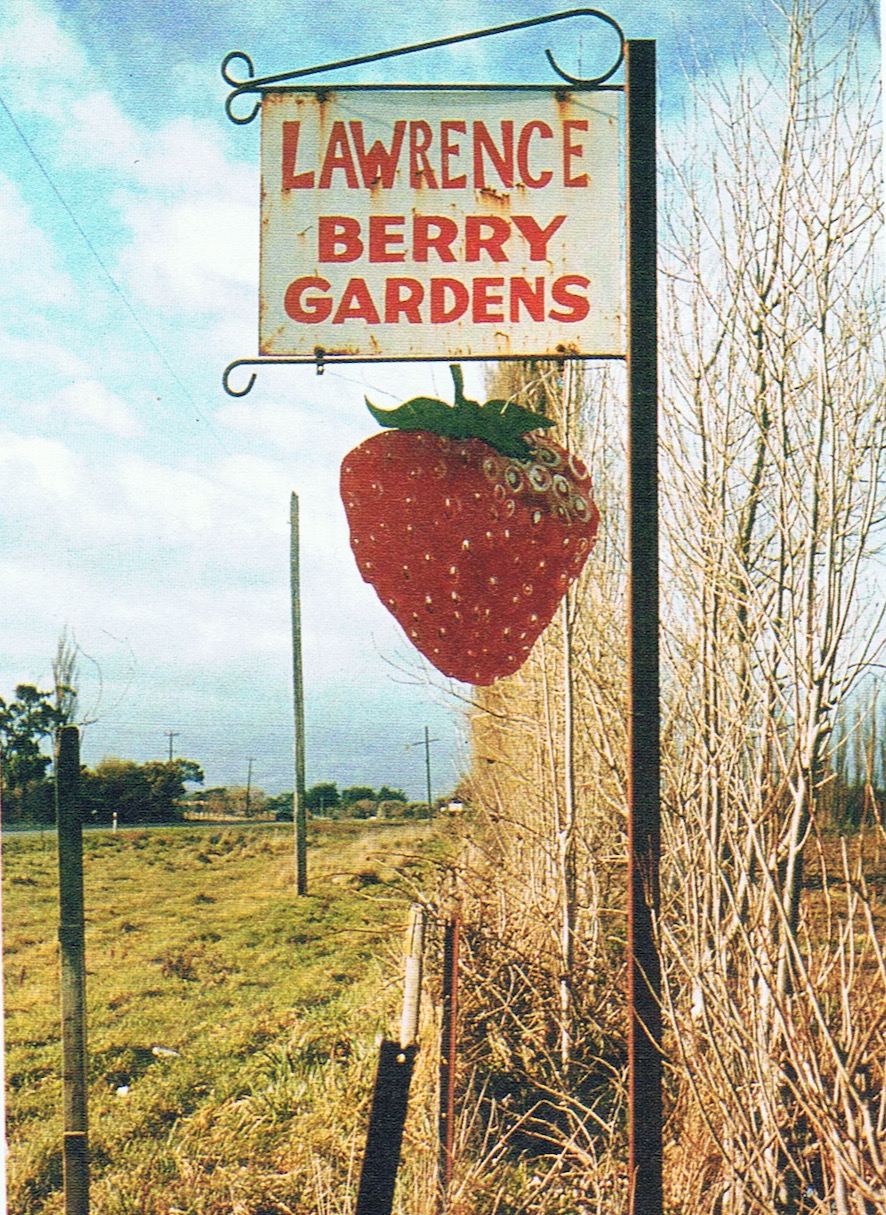
The livestock stud signs for roadside advertising are mass-produced by Cattle and Sheep Breeders' Associations and occasionally painted by local signwriters. Unfortunately, they are rarely painted by the farmers themselves. To me these signs become roadside prints and paintings as the mailbox becomes sculpture. Seeing a sign or mailbox as a shape or colour in the distance stimulates me. I become inquisitive to find out what it is. Have I seen one like it before? Can I use it, do something with it or is it best left alone?
Each sign, like each mailbox and post, is unique—if not through livestock type, then in the farm or owner's name, rust-stains, colour, faded and peeling paint, repainted surfaces, and patterns created through layers of dust and rain. They differ right down to the scrape marks, holes and dents from ricocheting slugs that acknowledge their history as targets. They have their own roadside history, some being painted through generations of a farming family, only the initials being changed. Some move with the family to new properties and roadside positions; many are neglected for years. They are landmarks, used for giving directions to either their property, or one not too far down the road.
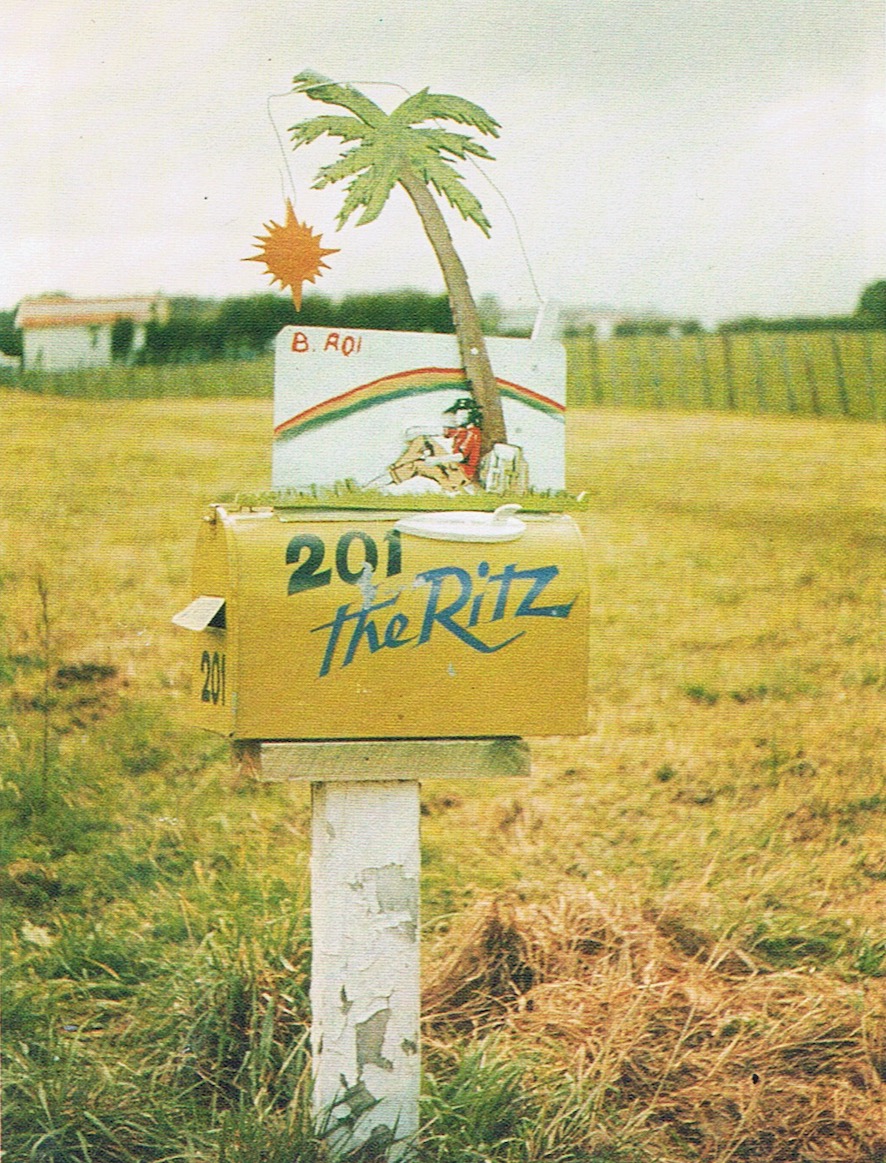
Wandering the back-roads of Silverdale, I saw and photographed a self-designed and painted sign by a home craft-potter. Twelve months later, walking through Dairy Flat, I came across that very sign . . . the potter had moved. To me the sign instantly became identifiable with a particular person: it became a type of roadside coat-of-arms. I clearly remember the first time I saw this sign. On the property behind were pots—pots stacked everywhere. I'd been looking at mailboxes for two days and the casual thought came to me that he should stick one of these pots on top of his mailbox. That thought never left me.
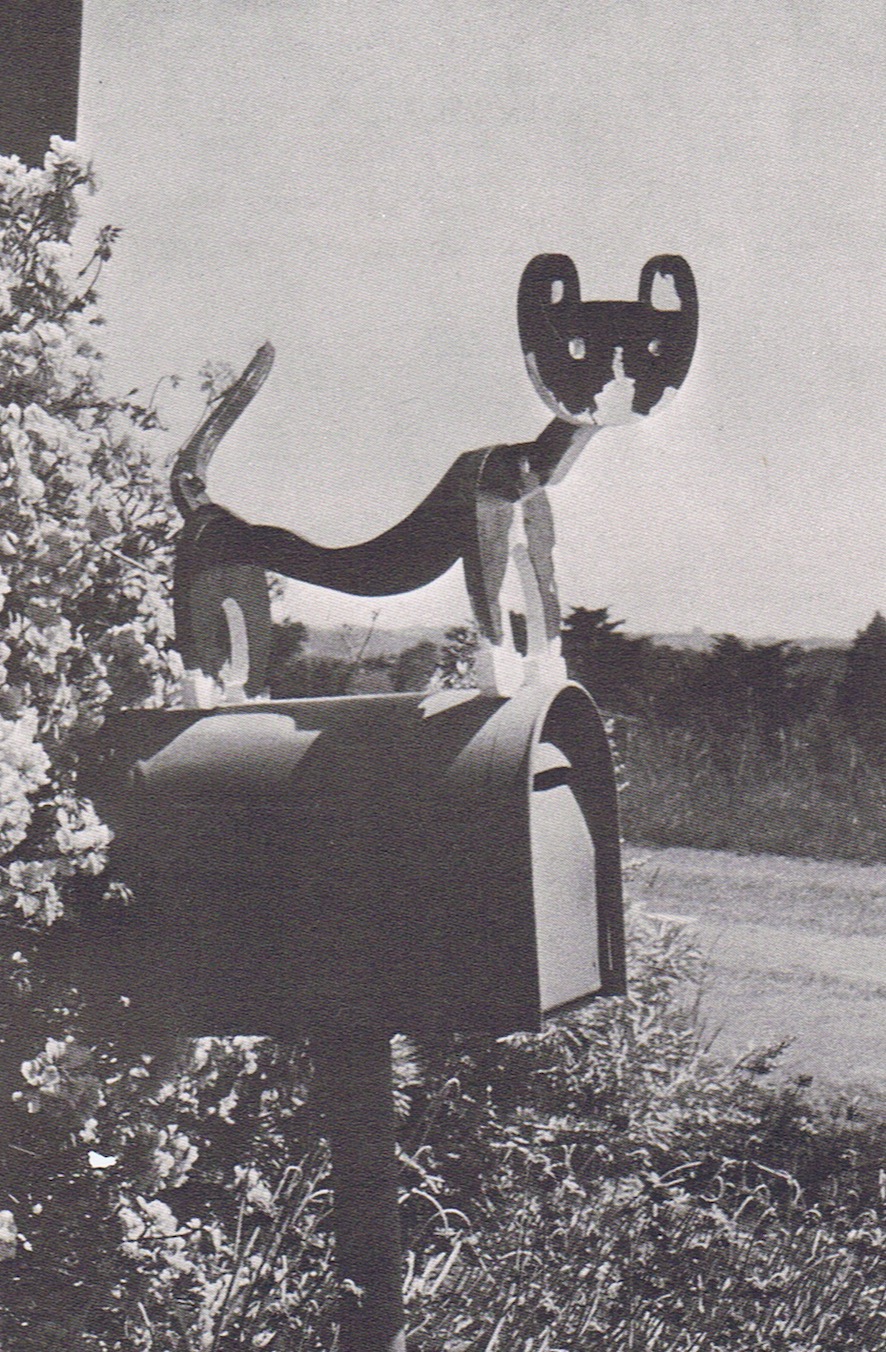
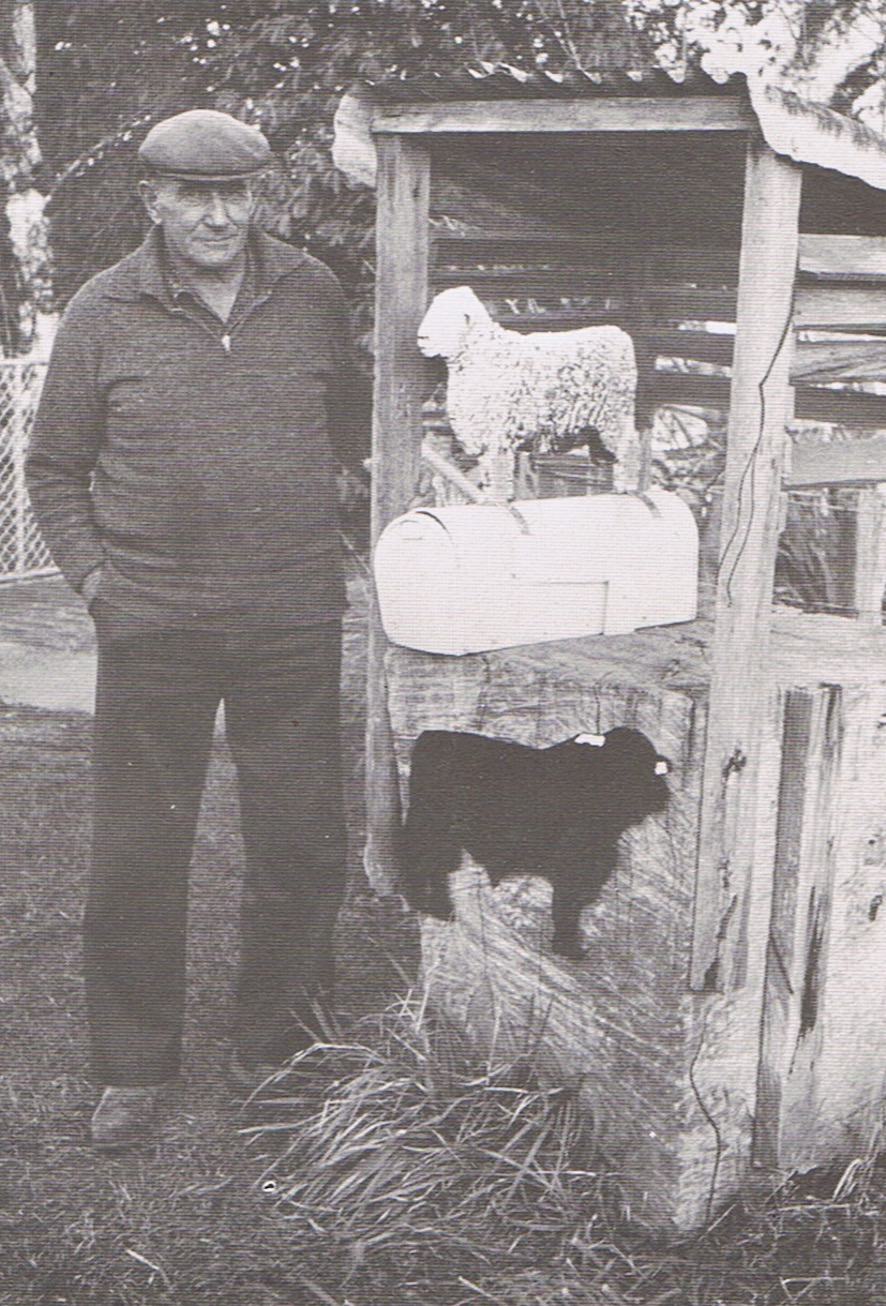
I started playing around with a variety of objects, toys, windmills, livestock, vegetables, fruit etc., in two- and three-dimensional shapes. Placed on the mailbox, they become visual images of what the mailbox owners do, make or sell. Like provincial rugby jersey colours and Rural Delivery newspaper name-plates, certain livestock types can suggest regions within New Zealand—main breeding areas, dairying, grazing, largest number, fat-lambing, wool production etc. A mailbox with a Romney Marsh ‘Ram’ sitting on top represents the Wairarapa/Manawatu: and even more so if a Times-Age or hand-painted Evening Standard sign were attached. The chances are that G. C. and B. M. Seay of `Chevlock Farm', living on the northern banks of the Waitaki River, would have a Chevoit sheep mailbox. Likewise the Jersey/ Friesian mailbox represents the main farming in Taranaki/Waikato and the back-bone of the New Zealand Dairy Economy.
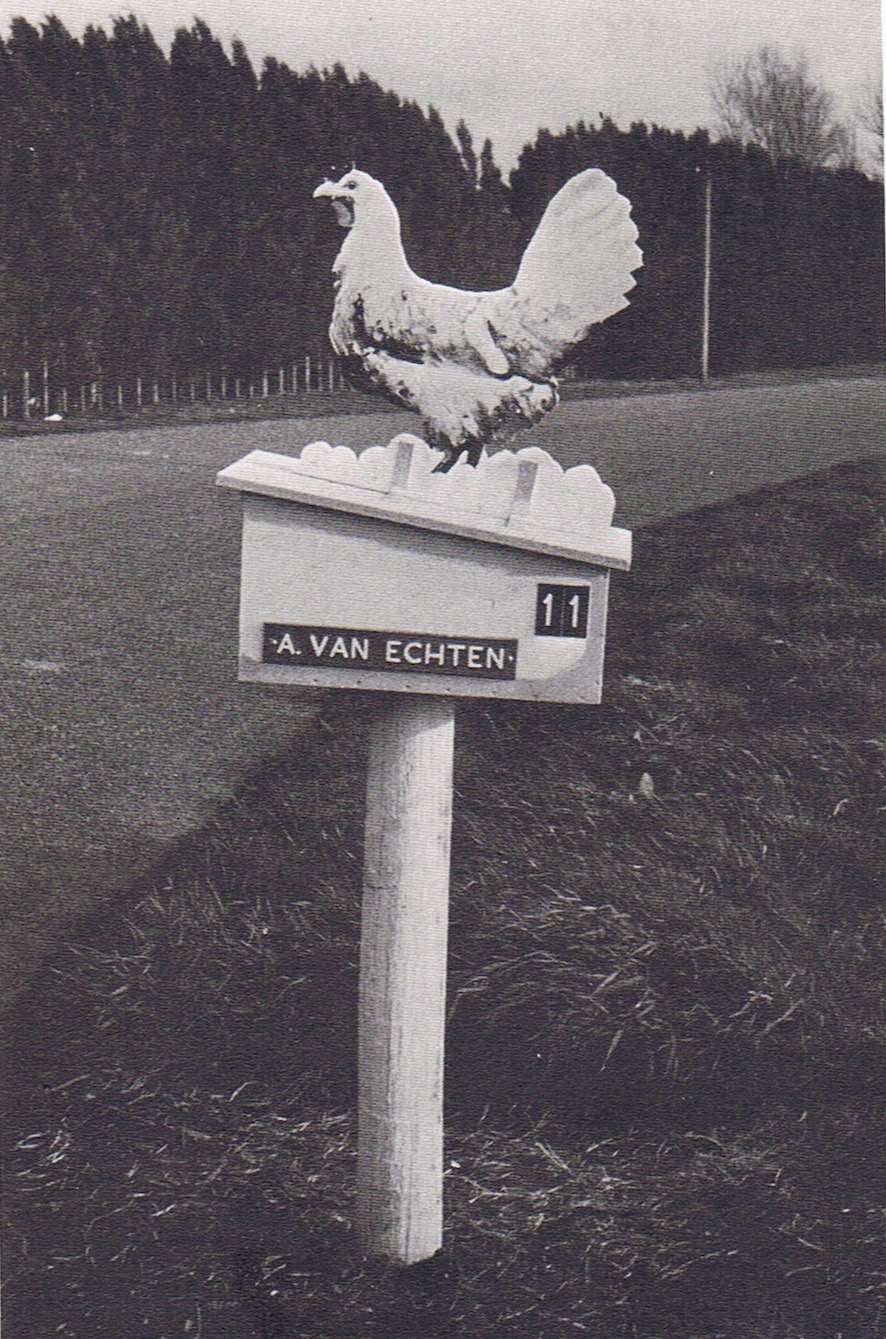
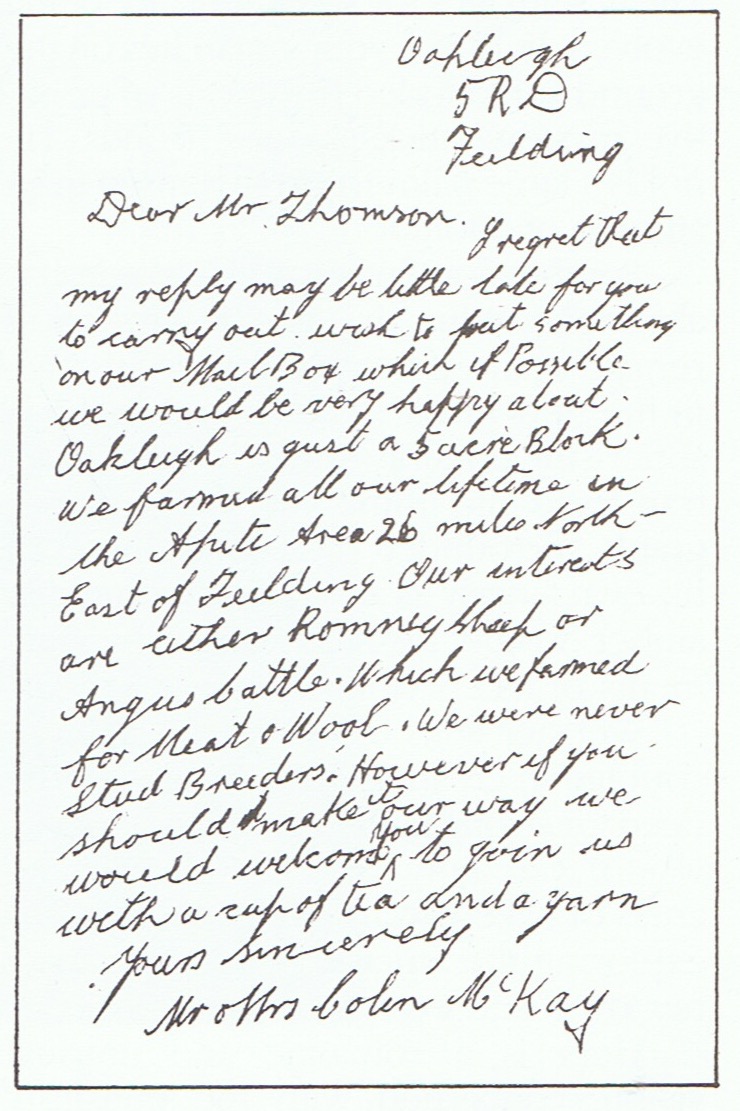
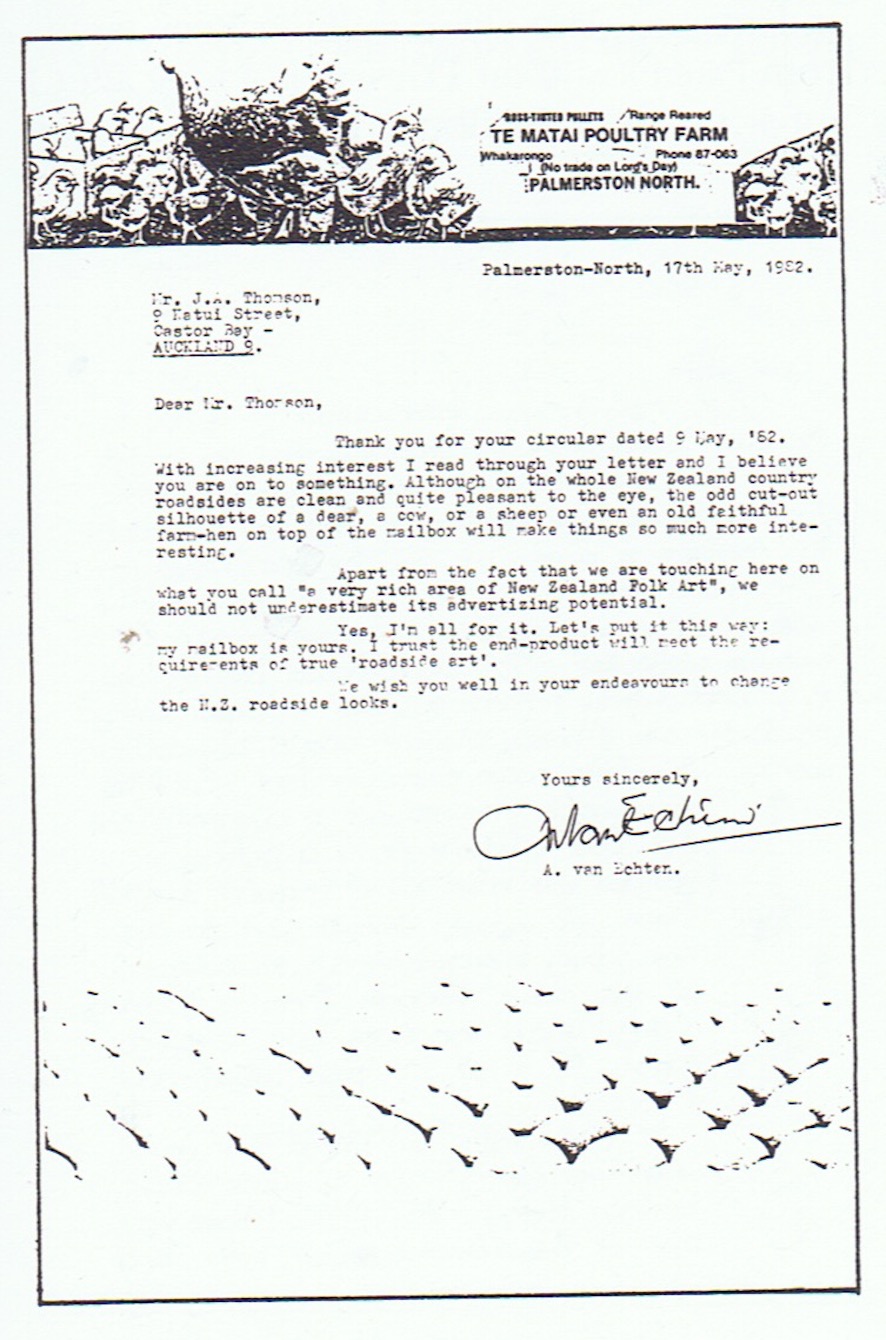
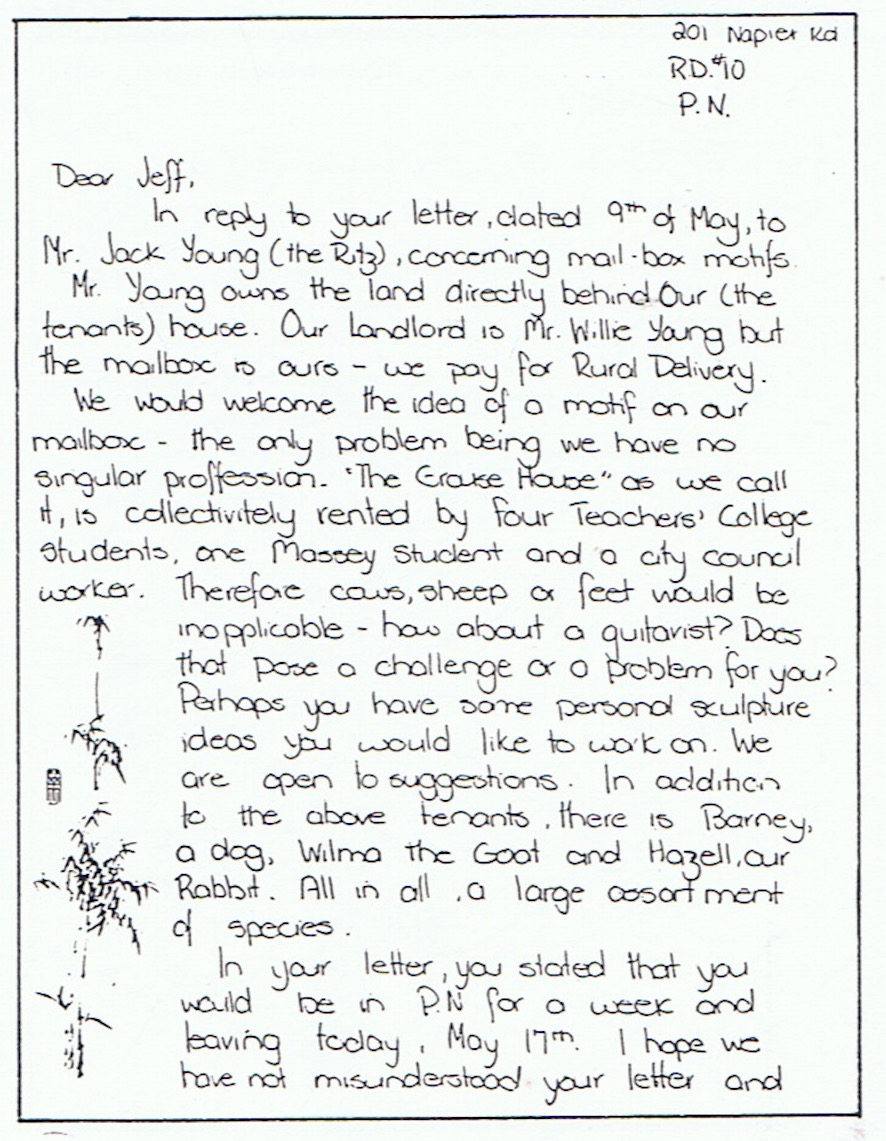
I become the rural `postie’ on my walks, delivering personally-addressed letters to the name on the mailbox. These relate what I do, including a proposal to make the receiver a mailbox addition. I raise and lower flags, photograph mailbox types, record names of people and farms, talk to, share meals with, and stay with farming families en route. Back in Auckland, I make whatever is requested using materials at hand: wire, wood, tin and paint. Upon completion I return and attach these to the mailboxes concerned. Eventually, I would like to call in at farms and make things on the spot, use materials found lying around the property, in the barn or milkshed, then walk off along the road to make something else at another farm entrance—whether the neighbouring property or a farm one hundred kilometres further on. I want my mailbox additions to live their own lives, develop their own roadside history. I hope people will speed past, some stopping to look and wonder. I would like them to become landmarks, to be transferred to mailboxes elsewhere when the farmers, flocks or herds move, or stay put when new owners take over. If ignored, they become dilapidated and rusticated: which appeals to me, for they can live on in a silent life of their own.
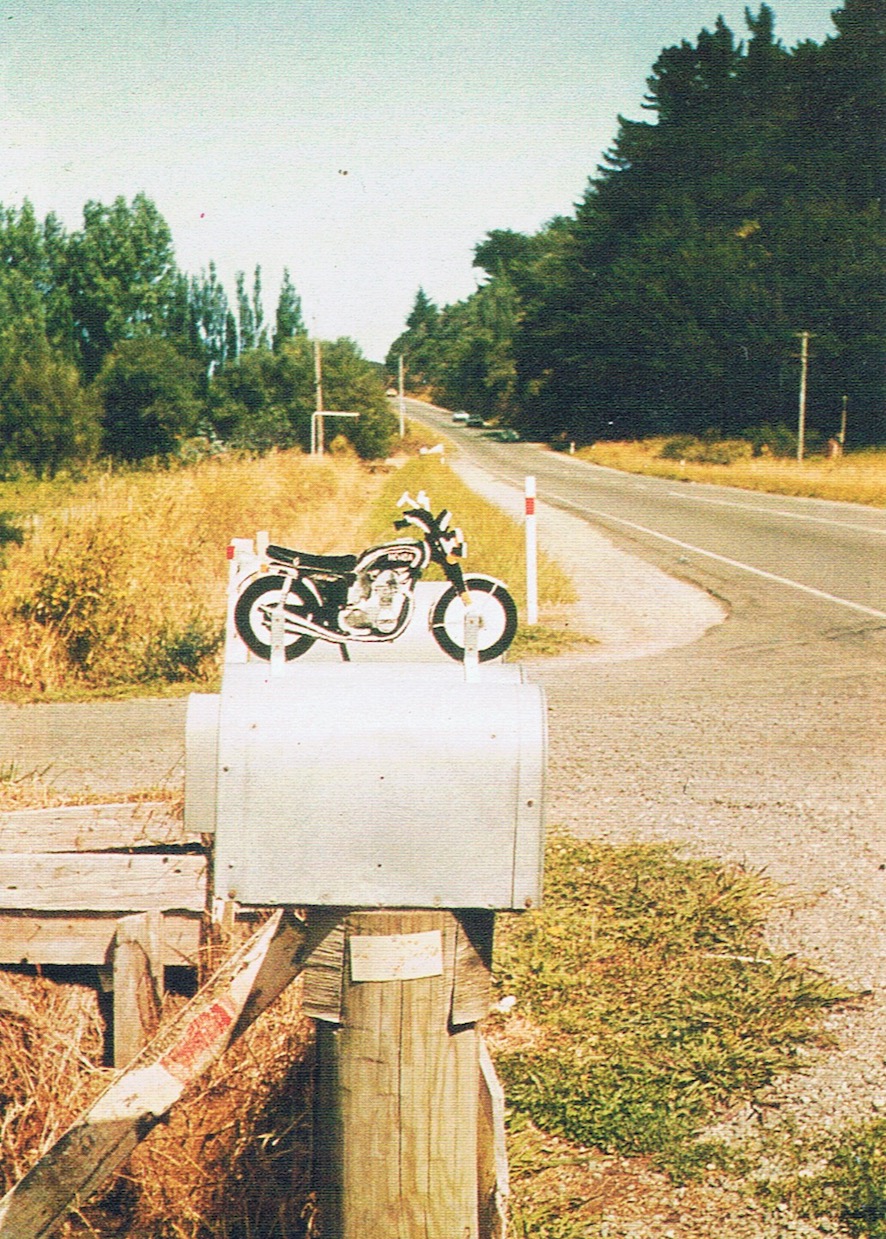
I accept that all roadside paraphernalia, including my mailbox insignia, are open to abuse by passing man or beast. Simon Morris' motorbike and attached mailbox disappeared one night. They were found by the local police ten kilometres away, lying on the main road in Wanganui, and returned undamaged. The share-milking Rees family from Patea lost their Friesian not long after I put it on their mailbox. They now live on their own 80-acre farm at Pungarehu, 20 minutes from New Plymouth, and want me to make another cow for them.
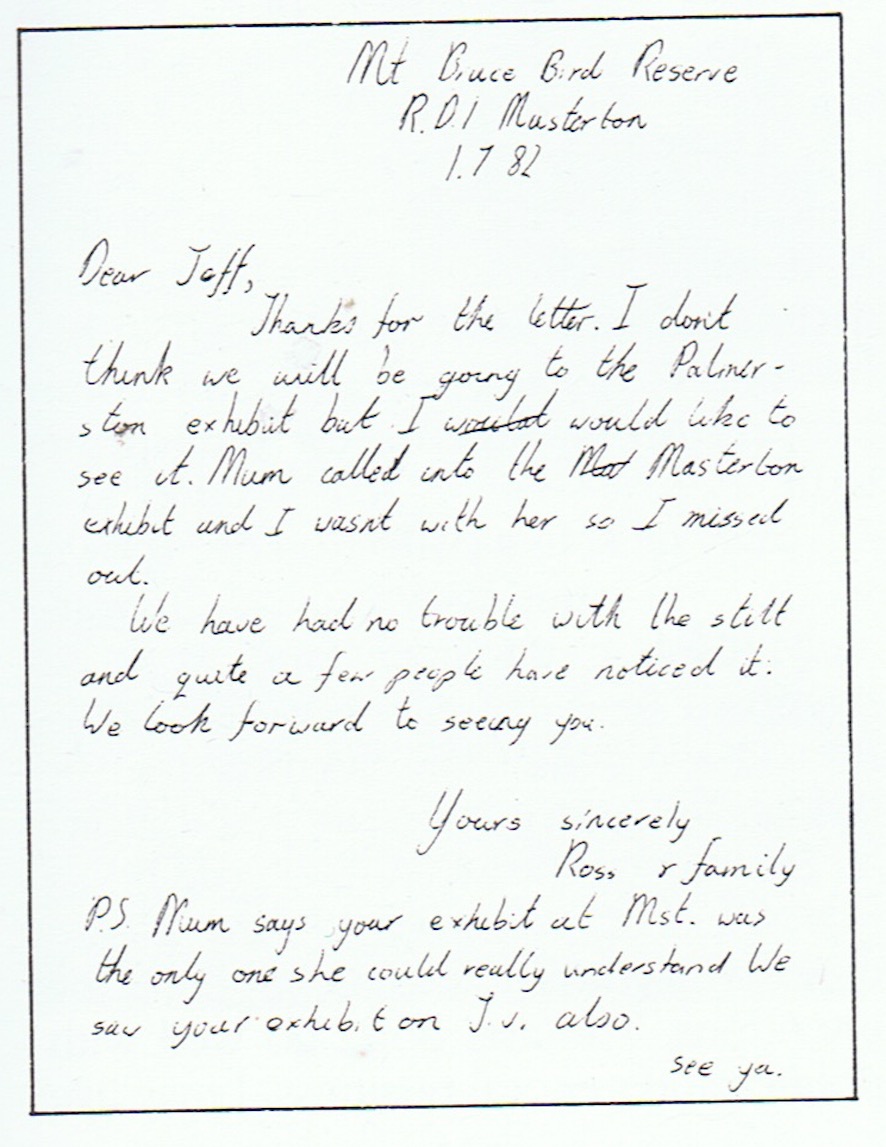
Ross Anderson's Black Stilt still protects the entrance to the Mount Bruce Native Bird Reserve. On New Year's Day, it was found to be the stork bringing the baby. A passing prankster had tied a handkerchief round its neck with a baby-doll resting inside. The Mills of Feilding recognised instantly the shape, colour and markings of their mailbox Jersey. In that instance I'd used an example of a Jersey cow illustrated in a New Zealand Automobile Association Road Map publication. This cow is still living and being milked on a farm two hundred kilometres away in Taranaki. The Mills know the farmer and cow, and have on their Town Milk Supply a daughter of the very Jersey represented on their mailbox.
While in Palmerston North I visited the Jersey Cattle Breeders Association. They were interested in what I was doing and asked me to make my own form of mailbox livestock for their National Conference in Orewa. In a field opposite the main shopping area I placed nine mailboxes with an assortment of livestock breeds attached on the tops. Freely roaming amongst and rubbing noses with these were several pedigree Jersey bulls, cows and calves. Nearby was the latest in breeding and farming technology, the Ambreed Artificial Insemination and Lives-tock Improvement tents, a brand new Ford tractor and the latest in milking machinery. A visual and verbal link was established between myself and my work and the Jersey cattle-farming community.
This was highlighted later at the opening evening of the Hansell's Sculpture Exhibition in the Manawatu Art Gallery, when more farming folk turned out to see their mailbox additions than the usual art-gallery-goers. Having attached and photographed a large number of assorted rural occupation-related objects, I brought these into the gallery space and leaned each one against the wall beneath their respective letters and photographs. I informed all those involved so that they could collect them at their own convenience during the show.