
Book review
Up-&-Coming Art PublicationsROSEMARY HEMMINGS
Late Summer Madness!
The Summer Book; A New Zealand Miscellany by Briget Williams and Roy Parsons, published by Port Nicholson Press ($19.95) is a reminder that summer has finally arrived. This is the perfect book to take to the beach to dip into between snoozes. The small size format means that the wind does not ruffle the pages, and allows one to balance the edition in exactly the right spot between the navel and the head for maximum eye contact. The articles are varied, short, and slightly stimulating. The Katherine Mansfield play sets the scene: from thereon in we are regaled by a variety of nostalgia of varying quality and length. W. H. Oliver's collection of colonial lyrics twang uneasily on our Utu-ridden ears ('Thus can glowing hist'ry tell/ ' How those wild Waikatos fell'). Brian Brake's Calcutta images sidle uneasily beside the Portrait of My Husband John Danford Greenwood by his adoring colonial wife Sarah, whose passion for babies produced twelve new citizens for the Colony. The contrast between her existence and that of Matarena Reneti is one of the jolts we have to put up with in our summer-time somnolence. Matarena is the last child of twenty-six living in rural Bay of Plenty: soon she becomes almost the last living child as the scourge of tuberculosis encroaches. Tony Simpson's Six Ways to Cook A Rabbit gives us insight into the delectable nature of the beast, and conveys hints on preparing it for the table. Food for thought - just the right depth of thought for the beach browser.
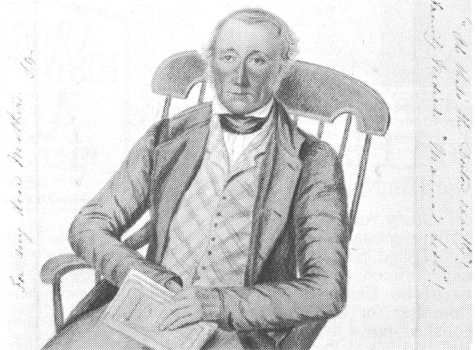
SARAH GREENWOOD
Portrait of John Danforth
Greenwood 1852
(watercolour illustrated in
The Summer Book
from the collection of The
Alexander Turnbull Library)
A Potter & His Work
Shiga the Potter, by photographer Jutta Malnic and Bob Thompson documents a Japanese potter who lived on the outskirts of Sydney until recently. His imminent departure prompted his friend the photographer to record his work. This is no mere depiction of pots however. The photographer is obviously very familiar with the philosophy of the potter 'The aim is not to learn technique, but to transcend technique, the effort is not to improve one's work, but to improve one's total self'. This book carries page-size illustrations and a small amount of pertinent text ' The photographs allow the viewer to gain considerable understanding of the works themselves, and this makes the book of particular interest to those who are working with clay. (Published by Collins in association with the Australian Crafts Council at $25.95)
New Releases from Phaidon
Phaidon's new releases include two how-to-do-it books. Drawing and Painting the Landscape sets out what the author considers are the basic principles representing the landscape. Painting books obviously have their place: but the central idea seems to be missing here - the total involvement of the artist in experiencing, and experimenting with the materials and the subject without the direction of a text. Given that I hold such a view this particular book seems to me to detail carefully the techniques involved with the various mediums ranging from drawing to print-making - and all in a very accessible way. The Complete Guide to Needlework is a different matter. I have no preconceptions in this area, and search desperately for clues about how to achieve certain effects with certain stitches. The book is not for beginners like me. The stimulating and beautiful illustrations do not exactly parallel the accompanying text. I am left with the desire and not the means! This is doubtless an interesting book for those women who have some skill - especially those who may be involved in the Full Circle project at the present moment.
Art Books from the Pacific
The Polynesian Bookshop in Ponsonby Road, Auckland, distributes the following titles - published by the University of the South Pacific.
Art in the Pacific is a paperback by Vilsoni Tausie. It classifies the art into two areas, functional objects and ceremonial objects, and shows how the homogeniety of design principles behind these two groupings derive from the function and form of the human body. The second part of the book looks at new directions in art, particularly at tourist and commercial influences.
Aloi Pitioka Artist of the Pacific is a simply constructed paperback filled with drawings, sayings and photographs of this Wallis Island artist. I prefer to identify with bird, especially cocks', he says when describing himself. This book is subtitled in French. It would make an interesting addition to the French school-text-book resources. Students would certainly be exposed to another cultural viewpoint!