
Transcending Boundaries
Yuki Kihara in Conversation with Cameron Ah Loo-Matamua
The late curator Jim Vivieaere once said of Yuki Kihara, ‘“Who am I, what am I, and what are you?” are questions that will never haunt or torment Kihara. Rather, they provide her with the material for her artwork.’ In the years since she presented her critically acclaimed Paradise Camp at the 59th Venice Biennale, Kihara’s project has continued to expand across the global North, with MoMA’s forthcoming Taking Back Our Space: New Perspectives on Photography (2026) marking an upcoming chapter. Over the past 16 months Cameron Ah Loo-Matamua has met the artist in her Henderson studio in Tāmaki Makaurau, and on the island of Upolu, Sāmoa, to discuss the ways she interrogates archives, culture and customary practice to reassemble history into something holistic and reparative. The following conversation is a culmination of their ongoing talanoa (dialogue).
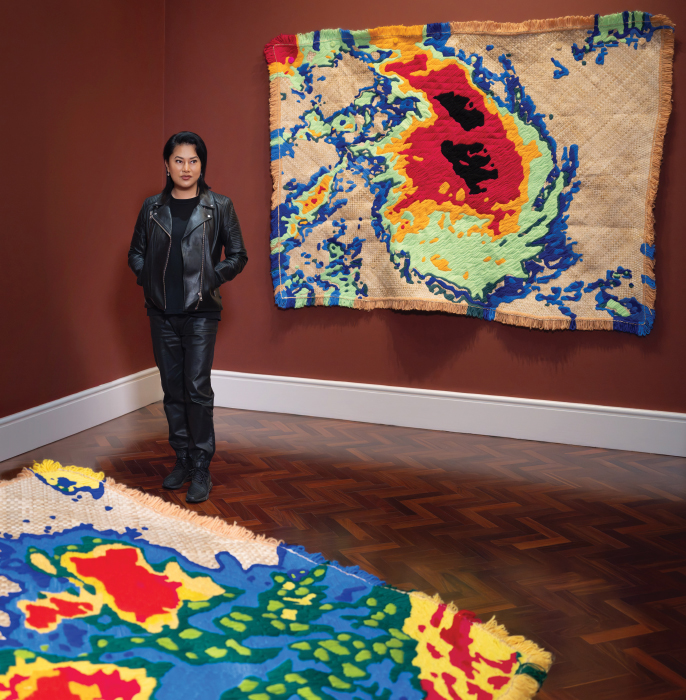
Yuki Kihara in situ at Gus Fisher Gallery at her Tala o
le tau: Stories from the Weather exhibition presented between Gus
Fisher Gallery and Gow Langsford in 2025
(Photograph: Gui Taccetti)
Cameron Ah Loo-Matamua: I’ve been reflecting on the role of fashion and adornment in your practice, particularly having recently worked on the acquisition of your サ-モアのうた (Sāmoa no Uta) A Song About Sāmoa―Taiheiyō (Pacific) for Auckland Art Gallery Toi o Tāmaki. In that work, you blend the Japanese kimono form with Samoan siapo (barkcloth), creating garments that are sculptural and deeply rooted in customary techniques and cultural knowledge. Looking back, I know your formal training began in fashion design and construction, and that your Graffiti Dress — a kind of protest garment blending streetwear aesthetics with avant-garde Japanese and European silhouettes—was acquired by Te Papa while you were still a student. What has long animated you about the possibilities of adornment and fashion? Could you speak to how this early interest shaped your journey toward becoming the artist you are today?
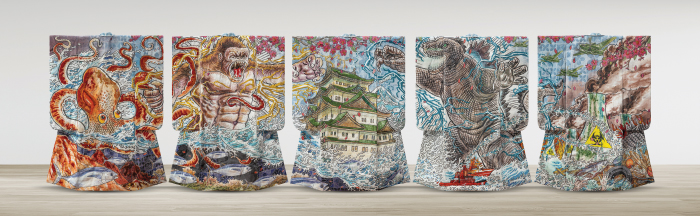
YUKI KIHARA Phase 4 Taiheiyō (Pacific) 2023, part of サ-モア のうた (Sāmoa no uta) A song about Sāmoa (2019–23) Samoan siapo, textiles, beads, plastic, kimono, 1750 x 1410 x 250 mm. (Collection of the Auckland Art Gallery Toi o Tāmaki. Courtesy of Yuki Kihara and Milford Galleries Dunedin and Queenstown) (Photograph: Gui Taccetti)
Yuki Kihara: My practice reflects an ongoing engagement with the interplay of fashion, adornment, and my own cultural identity. Through my work, I explore how these elements intersect and inform one another. Works such as Taiheiyō (Pacific) exemplify my approach, which involves blending customary techniques, such as those used in the creation of siapo, with the kimono form. They also serve as a metaphor for my own bicultural heritage of being Japanese and Samoan. This blending allows me to craft garments that are not only sculptural in their design but also culturally significant, embodying layers of meaning that connect the past with the present. I wish to highlight the dynamic and evolving nature of cultural expression.
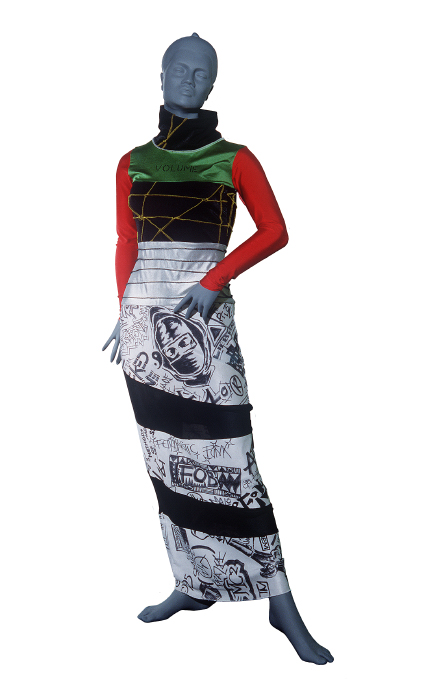
YUKI KIHARA Graffiti Dress 1995 (Collection of Te Papa Tongarewa Museum of New Zealand. Courtesy of Yuki Kihara and Te Papa Tongarewa Museum of New Zealand)
My early training in fashion design provided a solid foundation for this exploration and marked an important period of recognition for my work. Graffiti Dress (1995) demonstrated my early interest in pushing boundaries and experimenting with the transformative potential of textiles as a sculptural material. The dress won the Paramount Prize for the Du Pont Student Design Awards in the same year as it was acquired by Te Papa. This gave me reassurance that as a young person who migrated from Sāmoa to Aotearoa New Zealand at the age of 16, that I could highlight my migrant experience in a wider discussion through museums.
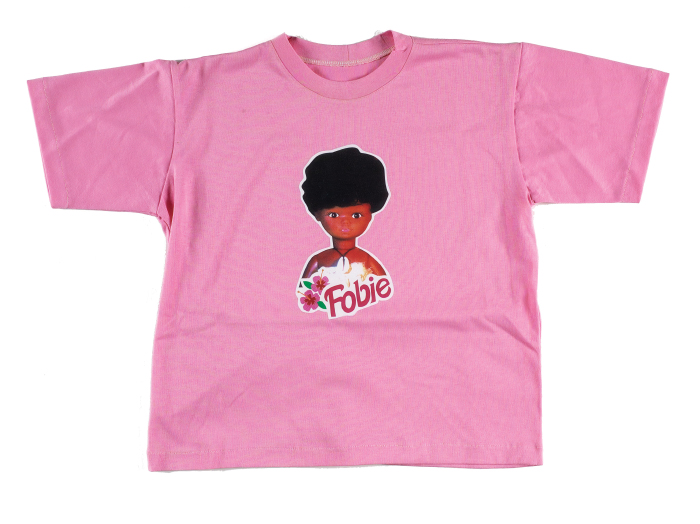
T-shirt from Yuki Kihara’s Tauanoa’i: Adorn to Excess (2001) (Collection Te Papa Tongarewa Museum of New Zealand)
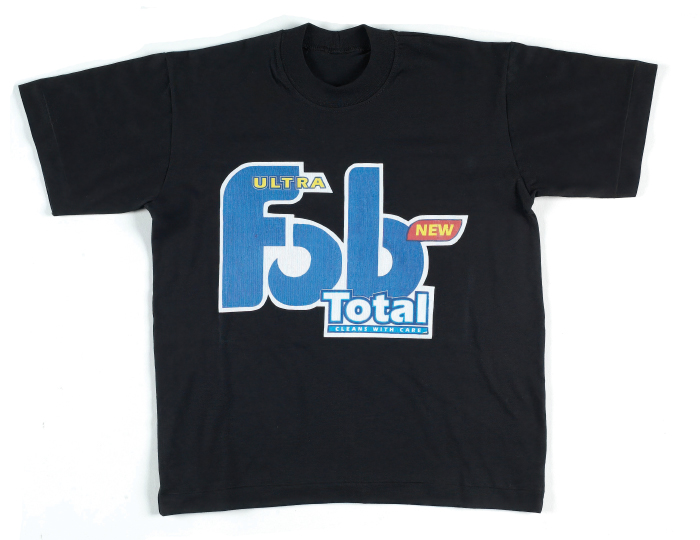
T-shirt from Yuki Kihara’s Tauanoa’i: Adorn to Excess (2001) (Collection Te Papa Tongarewa Museum of New Zealand)
C.A.L-M.: You’ve described your early training in fashion design as foundational to your practice. Can you speak more about your experience studying at Wellington Polytechnic, what was that environment like for you as a young artist-in-training? What kinds of conversations or expectations shaped that space, and how did you begin navigating the broader fashion industry and editorial world during that time?
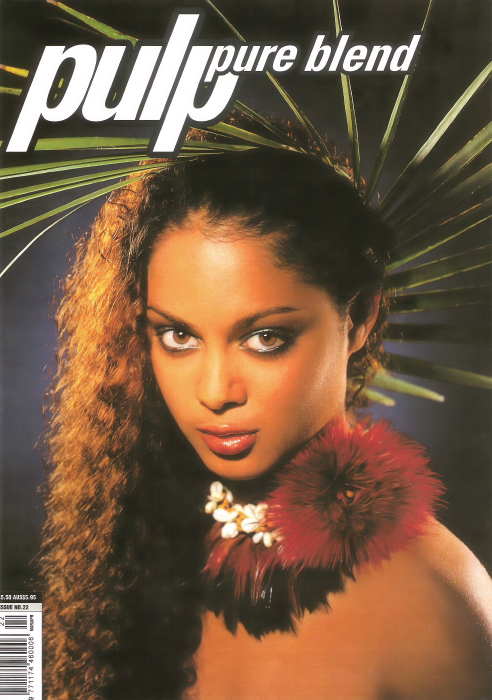
Cover of 2002 issue of Pulp magazine Cover photographer: Duncan Cole. Artistic directors: Chris Lorimer & Yuki Kihara (Collection of Auckland Art Gallery Toi o Tāmaki)
Y.K.: I entered Wellington Polytechnic (1992–96) with no prior sewing experience, which made aspects like pattern making and garment construction challenging. However, the art classes provided a creative outlet where I could freely explore my imagination, and this is where I truly thrived. The programme emphasised producing cohesive collections, a practice that has influenced my approach to this day, as I often create series of works under a theme rather than standalone pieces. At the time, the focus was on preparing us students to graduate and be ‘industry-ready’, with the expectation that we would enter the fashion industry. In contrast, I viewed textiles as a sculptural material, which shaped my perspective and approach to fashion design through a conceptual lens.
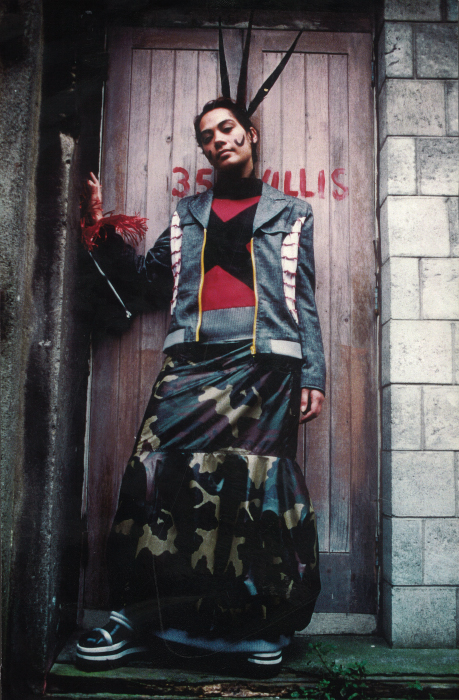
YUKI KIHARA Volume 1996 End-of-year collection for Wellington Polytechnic Fashion Design & Technology course (Courtesy of Yuki Kihara and Milford Galleries Dunedin and Queenstown. Photograph: Sarah Hunter)
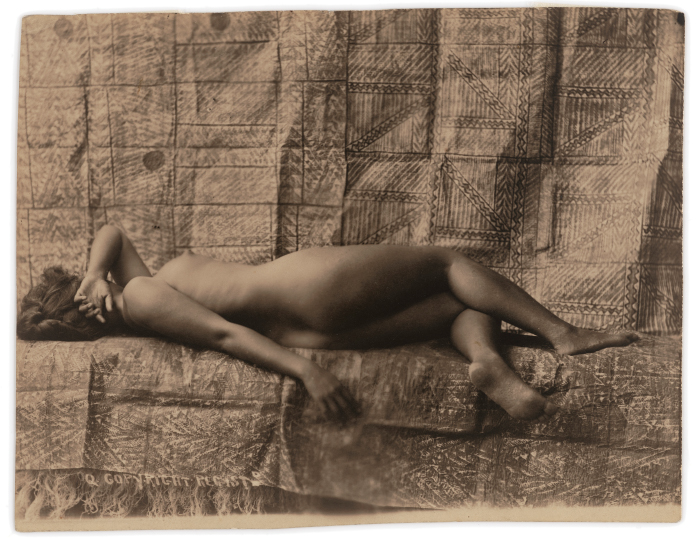
A photograph of a nude Samoan woman by Thomas Andrew (Collection of Te Papa Tongarewa Museum of New Zealand)
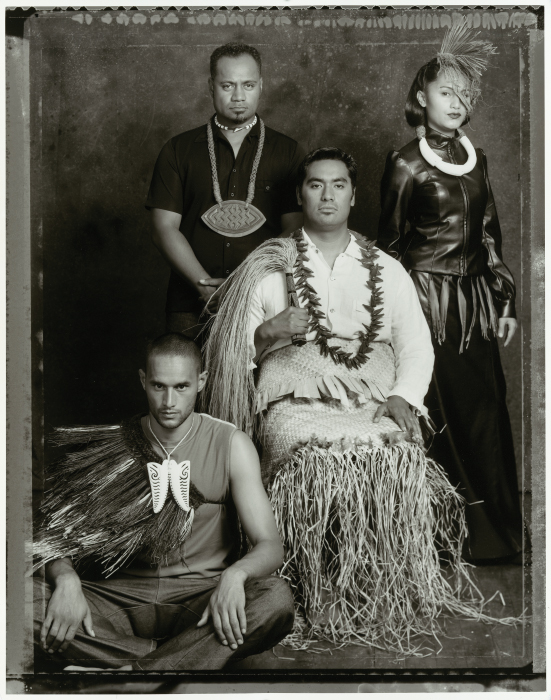
YUKI KIHARA High chief and his subjects from Savage Nobilities series 2021 (Collection of Auckland Art Gallery Toi o Tāmaki. Courtesy of Yuki Kihara and Auckland Art Gallery Toi o Tāmaki)
C.A.L-M.: It’s incredible hearing you reflect on this early stage of your career, Yuki, and your attentiveness to Pacific history and visual culture when approaching your work. It’s very clear you have always operated in the mode of an auteur, not working toward a single medium but rather building entire worlds which draw together fashion, craft, photography, film and archival inquiry. There are two early photographic series which seem to embody this approach, namely Savage Nobility and Velvet Dreams, which speak to both a colonial and pre-colonial understanding of Samoan society and mythology. What is the history of these works? I understand they may have originally appeared as fashion editorials, but quickly took on a life outside of the page.
Y.K.: The Savage Nobility series of photographs is inspired by early New Zealand colonial photography, presented as a fashion editorial in Pulp magazine in 2001. This project was developed in collaboration with the magazine’s fashion editor Chris Lorimer, using photographs taken by Duncan Cole. The concept aimed to blend historical and cultural narratives with the visual appeal of contemporary fashion. A significant challenge in this project was balancing the editorial’s narrative with the commercial appeal of the clothes and accessories worn by the models. The series drew on the visual language of colonial-era photography to explore themes of cultural identity and the interplay between tradition and modernity. This approach reflects the broader context of how fashion and photography can serve as mediums for cultural commentary, bridging historical narratives with contemporary concerns. Another significant factor in the fashion editorial is the inclusion of models and accessories that added depth and cultural resonance. The editorial featured adornments by artists Niki Hastings-McFall, Sofia Tekela-Smith and Chris Charteris, alongside contributions from artists (posing as models) such as Igelese Ete, Oscar Kightley, Darren Kamali, Chey Ataria, Michelle Ah Kui and Teremoana Rapley to name a few. My own participation as one of the models marked a pivotal moment in my artistic journey, as it was the first time I worked on a photoshoot where I was both in front of and behind the camera. This dual role sparked my interest in using my own body as an artistic medium to embody a variety of characters within my practice.
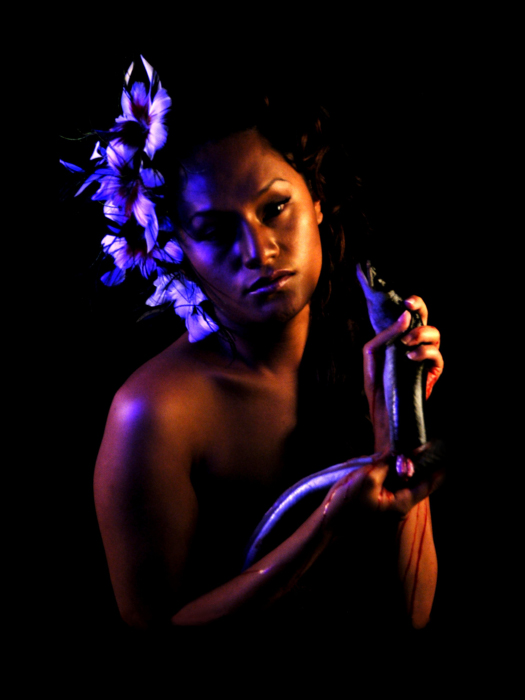
YUKI KIHARA Sina ma tuna: Sina and her eel 2003 C-type print, 640 x 530 mm. (Collection of Te Kunenga ki Pūrehuroa Massey University. Courtesy of Yuki Kihara and Milford Galleries Dunedin and Queenstown)
C.A.L-M.: You spoke earlier about your interest in fabric as a sculptural material. I was fortunate to visit you and the Moata‘a Aualuma Group in studio, so to speak, and to witness the production of your new fala su‘i, or embroidered mats, which you recently debuted at Gus Fisher Gallery in Tala o le tau: Stories from the Weather. Could you speak more about the process of producing these works in collaboration with a women’s community group of weavers and makers? I’m especially interested in how this process engages customary making practices, and how you’re supporting not only the continuation of those traditions, but also the development of a sustainable creative economy for these makers and for Sāmoa more broadly.
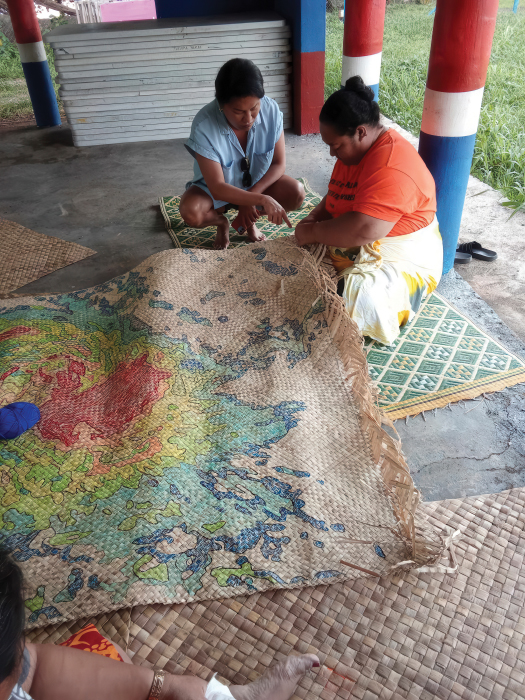
YUKI KIHARA production still from Tala o le tau: Stories from the Weather series (2025) (Courtesy of Yuki Kihara and Gow Langsford)
Y.K.: The process of producing the fala su‘i in collaboration with the Moata‘a Aualuma Community was deeply rooted in customary practices, reflecting a commitment to preserving and celebrating Samoan cultural heritage. Working alongside this community group of weavers and embroiderers provided an opportunity to honour customary techniques while fostering a sustainable creative economy. This collaboration went beyond the creation of the fala su‘i themselves; it became a platform for skill-sharing, mentorship, innovation and talanoa. By engaging with the group’s expertise, we were able to support the continuation of these time-honoured practices while also empowering the contemporary applications for their craft. This approach not only enriched the cultural significance of the fala su‘i but also empowered the makers by providing economic opportunities and a broader audience for their work. Through this process, the project bridged heritage and innovation, demonstrating how customary artforms can evolve to meet modern needs while maintaining their cultural integrity.
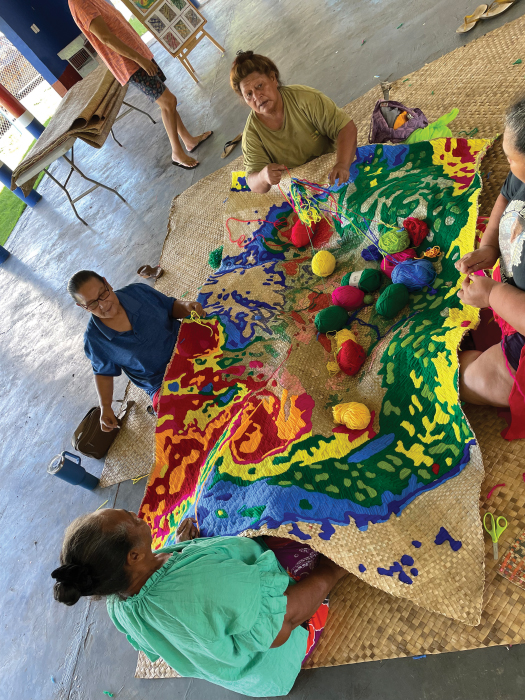
YUKI KIHARA production still from Tala o le tau: Stories from the Weather series (2025) (Courtesy of Yuki Kihara and Gow Langsford)
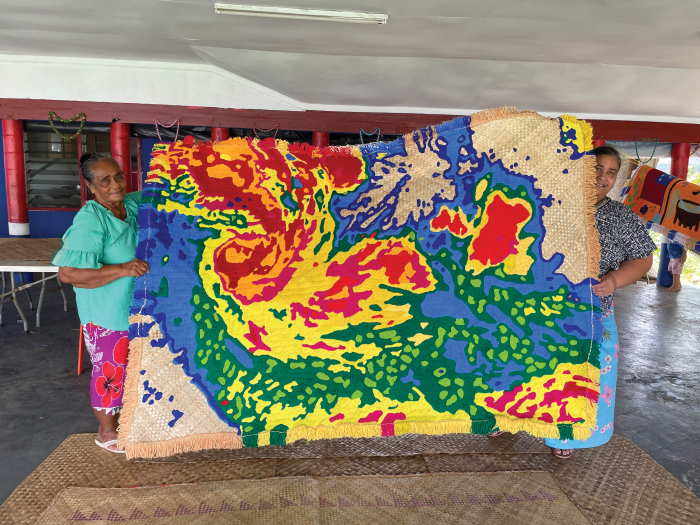
YUKI KIHARA production still from Tala o le tau: Stories from the Weather series (2025) (Courtesy of Yuki Kihara and Gow Langsford)
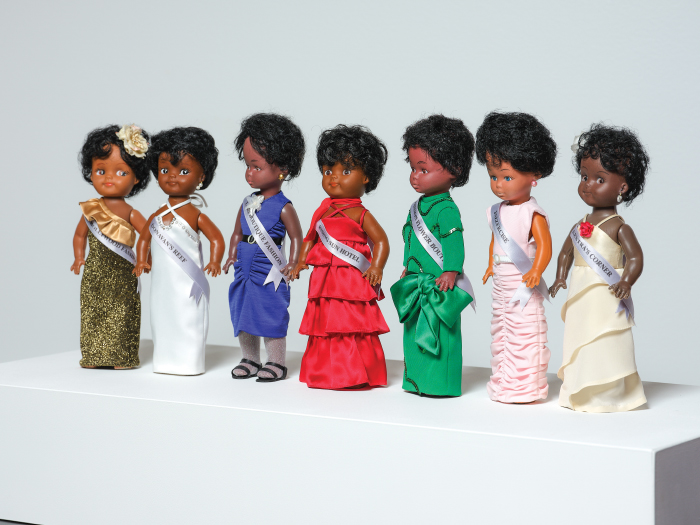
YUKI KIHARA exhibition still from A Night to Remember 2025 (Courtesy of Yuki Kihara and Milford Galleries Dunedin and Queenstown. Photograph: Sam Harnett)
C.A.L-M.: Your sculptural series A Night to Remember feels especially poignant now with the recent passing of Tuisina Ymania Brown, one of the figures remembered through these works. In this series, you repurpose found dolls that once wore exoticised ‘Polynesian’ outfits, refashioning them into representations of Fa‘afafine beauty pageant contestants from 1983 Sāmoa. Could you speak to the making of these works, both the research and the material transformation involved, and what it meant to bring these dolls into a space of honour, rather than caricature? I’m also curious to hear your thoughts on the role of visual art, costume and aesthetics in supporting political movements/resistance and cultural sovereignty.
Y.K.: The process of creating these works involved extensive research into the history and cultural context of the beauty pageants, as well as the broader social and political landscape of the time. The material transformation of the dolls was a deliberate act of reclamation, refashioning them from objects of caricature into symbols of pride, beauty and cultural identity. By bringing these dolls into a space of honour, the series challenges the exoticism and stereotypes often imposed on Fa‘afafine and Moana Pacific cultures, instead celebrating their resilience, creativity and cultural sovereignty. I worked closely with Venerable Elder Galumalemana Alfred ‘Freda’ Waterhouse ― a former contestant who also competed in the 1983 Fa‘afafine pageant, to recreate each of the dresses worn by seven out of 19 contestants. The title was based on Freda fondly recalling the pageant as being ‘A night to remember’. Over the last decade, I’ve been collecting the dolls previously dressed in Polynesian-inspired costumes found in Auckland thrift shops. These dolls, mass-produced in Hong Kong, perpetuate racial stereotypes. In my work, the dolls are repurposed to memorialise a significant milestone ― the beauty pageant ― in Sāmoa’s Fa‘afafine history that’s often marginalised. The dolls represent the resilience of the Fa‘afafine community and pay tribute to generations of Fa‘afafine who paved the way forward for all Samoans, including Fa‘afafine, today. In 2013, Tuisina was one of three Fa‘afafine lawyers alongside Phineas Hartson and Alex Su‘a at the request of the Sāmoa Fa‘afafine Association to submit an appeal of the Crime Ordinance Act of 1961―a New Zealand colonial-era law which banned female impersonation by any male in public; and homosexuality, where the punishment for breaking these laws had a fine and imprisonment. As a result, many Fa‘afafine fled to the neighbouring territory of American Sāmoa in fear of being persecuted by the authorities. The anti-Fa‘afafine laws introduced by New Zealand colonial officials reflects their paternalist view of Sāmoa by highlighting the Fa‘afafine community as an impediment towards becoming an independent, heteronormative nation. The female impersonation law was finally abolished. However, homosexuality remains illegal but not enforced. Despite this, however, the crown continues to be passed on between generations in Fa‘afafine pageants, which have become the platform to showcase Fa‘afafine creativity and activism.
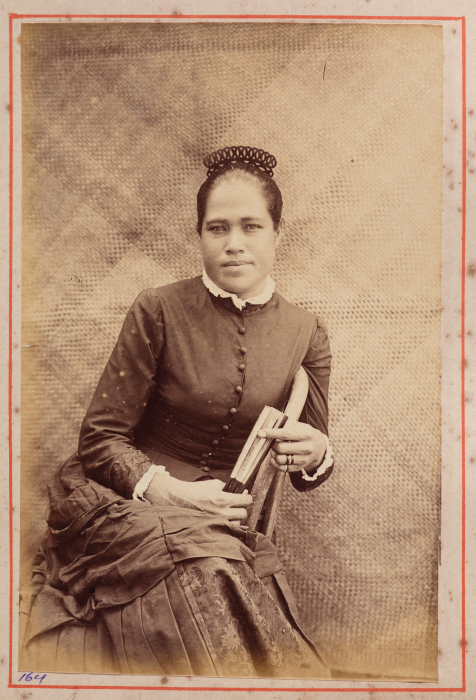
THOMAS ANDREW Samoan Half Caste 1887 Albumen silver print, 140 x 95 mm. (Collection of Te Papa Tongarewa Museum of New Zealand)
C.A.L-M.: Earlier you mentioned using your body as an artistic medium, a decision that began during your early work in fashion editorial. One of your most enduring figures across performance, video and photography is Salome, who first appeared in 2002 and often wears Victorian mourning dress. Drawing from colonial photographs like Samoan Half Caste, I feel Salome embodies the emotional and visual residue of empire — a character who mourns and disrupts from within. Could you speak to the development of Salome over time, and the role she plays within your broader practice? I see her as a kind of precursor to Darwin Drag, an early enactment of what I might call ‘colonial drag’, although expressed in a more meditative and sombre tone. What has Salome allowed you to explore that other characters or forms have not?
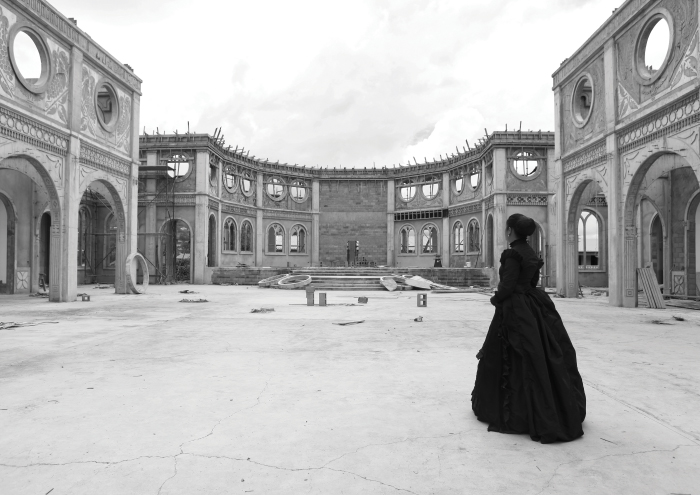
YUKI KIHARA Roman Catholic Church, Apia from Where do we come from? What are we? Where are we going? series 2013 (Courtesy of Yuki Kihara and Milford Galleries Dunedin and Queenstown)
Y.K.: The character of Salome evolved alongside my process of learning about photography, both technically and theoretically. I looked at the sequential photography of Étienne-Jules Marey and Eadweard Muybridge as inspiration for the shape and emotional tone of the 2009 tsunami in Salome’s performance as a silent video work. The visual aesthetic of sequential photography was possible through lenticular photographs, popular in the mainstream commercial realm. However, lenticular photographs, once a staple for marketing to the masses, are now replaced by digital billboards. This evolution of the medium fascinates me, as it reflects technological shifts and their impact on visual culture. Just as Salome uses time and space as a sculptural material, my pursuit of using lenticular photographs as a dying craft—in a way—is a critique of the evolution of lens-based media. Out of all the works I’ve made in the past, the figure of Salome particularly through lenticular photographs has found success on the collector market nationally and internationally, which allowed me to explore Salome further with more elaborate staging and higher production values, including the creation of lenticular photographs in a bespoke manner. I’m looking forward to finally seeing Salome’s evolution in an upcoming solo exhibition, Salome: An Angel of History, curated by Jaenine Parkinson and presented at The New Zealand Portrait Gallery Te Pūkenga Whakaata.
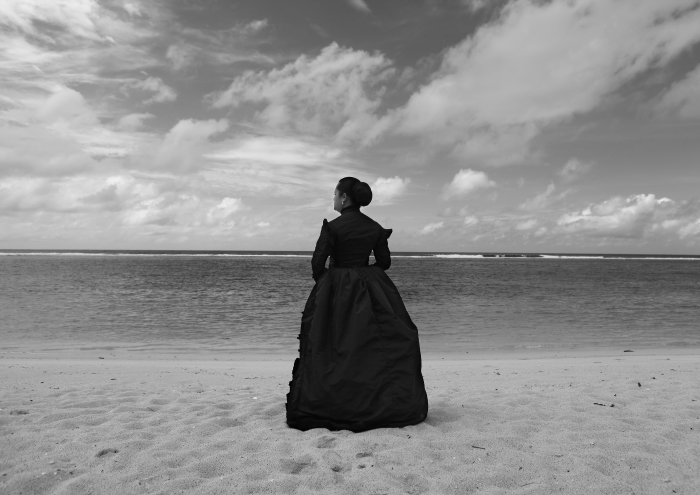
YUKI KIHARA After Tsunami Galu Afi, Lalomanu from Where do we come from? What are we? Where are we going? series 2013 (Courtesy of Yuki Kihara and Milford Galleries Dunedin and Queenstown)