
A Case and a Camera
Mark Smith & Felicity Jones, A Cultivated Wilderness
GREGORY O’BRIEN
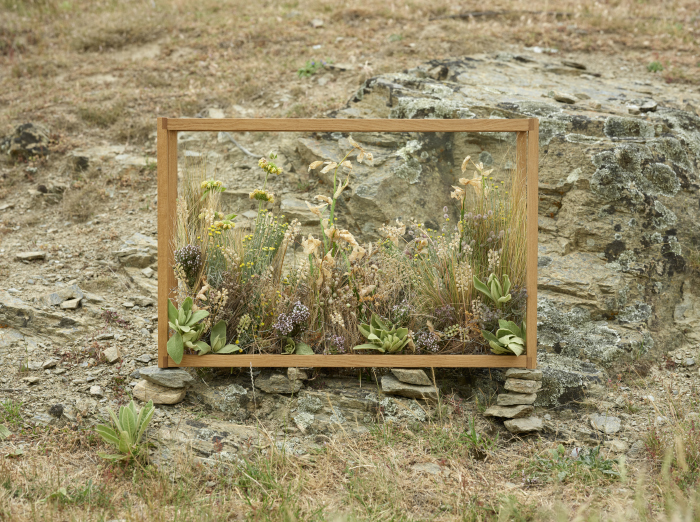
MARK SMITH & FELICITY JONES Foraged, Nevis Pass, Central Otago 2020 from Case Studies South (2021) Inkjet print on cotton rag, 830 x 1080 mm.
While narratives of Empire and colonisation form a dense canopy over the burgeoning ground-cover of Case Studies, the collaborative photographic works gathered under that title are, at the same time, infused with a myriad of personal associations and nuances. Photographer Mark Smith and botanical artist Felicity Jones have been working on the series since 2018, during which time the Wardian case has asserted itself as a central device—both visual and metaphorical.
Invented by English naturalist Nathaniel Bagshaw Ward just over a decade before the Treaty of Waitangi was signed, the Wardian case soon became, as the artists state, an important device in botanical globalisation: ‘During the nineteenth century these cases carried thousands of plants on ships heading for Aotearoa and made the return journey filled with NZ natives, many destined for Kew Gardens.’
Without shedding their attendant narratives of adaptation, acclimatisation, ‘botanical and cultural counterpoint’ (MS & FJ’s phrase), the skeletal case (with or without glass panes) becomes, in these photographs, an almost-character, usually centre-frame, as in a formal portrait. Beyond history’s clamour and stress, the case is presented as a humble and sympathetic structure, variable in its moods as in its contents. Like the outbuilding in Mary Ursula Bethell’s poem ‘Garage’, it is ‘a structure of excessive plainness’.
In Smith and Jones’s project, both camera and case are set adrift (or deployed strategically) in a variety of carefully chosen sites, from the subtropical bush of Te Henga to the River Cherwell (Oxford, UK), where the Wardian case is placed on a seat at the prow of a punt, like someone beloved, facing back towards the photographer/punter, in time-honoured fashion. (The rowboat is another cipher of Empire being paddled into unexpected waters here.)
Highly mobile and fit for a number of purposes, but not without its baggage, the artist’s camera is also a historically loaded, cuboid interpolation into a landscape or setting. Both camera and Wardian case are well-travelled accessories of colonisation—yet their role here is essentially revisionist, restorative, arguing not only on behalf of personal/subjective experience but also on behalf of an interaction between native and introduced which feels akin to a reconciliation. A signal work, in this regard, is the photograph of Te Parapara Garden (a themed section of the Hamilton Gardens), in which a case containing cabbages is placed within the raised mounds of an extensive kūmara plantation, striking a harmonious, mutually sustaining note with the upstanding carved figure and pā-site fixtures in the background.
Elsewhere in the series, the sheer beauty and emotional loading of flowers—across all cultures—becomes itself the overarching canopy. There is a lesson I suspect Jones learnt from her florist mother, Pat: that the way one handles and arranges flowers equates with one’s manner of being. Without in any way downplaying the layered complexities of their subjects, Smith and Jones allow the flowers and plants their grace and their opulence, their ceremony, their moment outside of history.
Published in issue 192, Summer 2024-25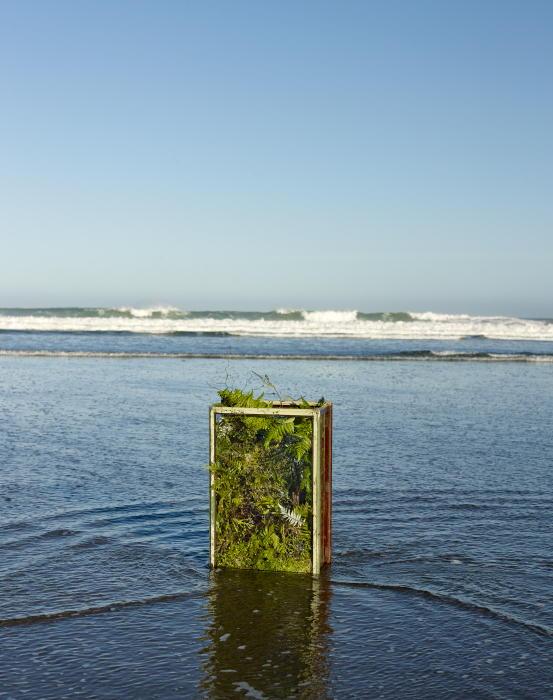
MARK SMITH & FELICITY JONES Dr Ward’s case #2 Te Henga 2018 from Case Studies (2019) Inkjet print on cotton rag, 830 x 1080 mm.
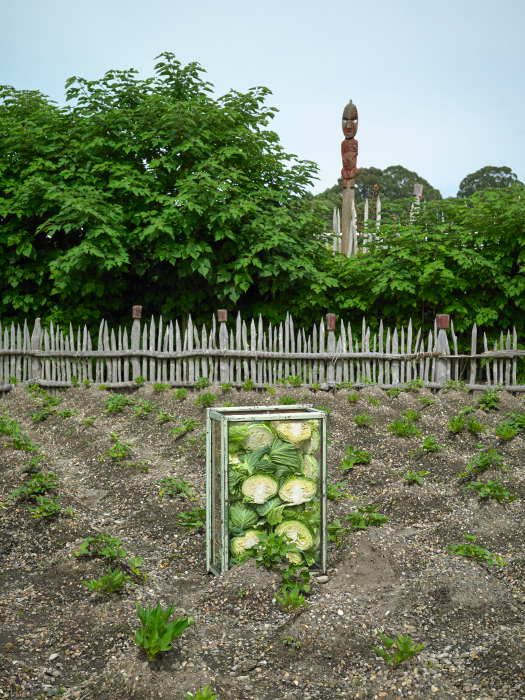
MARK SMITH & FELICITY JONES Cabbage and Kūmara Te Parapara Garden, Hamilton Gardens 2018 from Case Studies (2019) Inkjet print on cotton rag, 830 x 1080 mm.
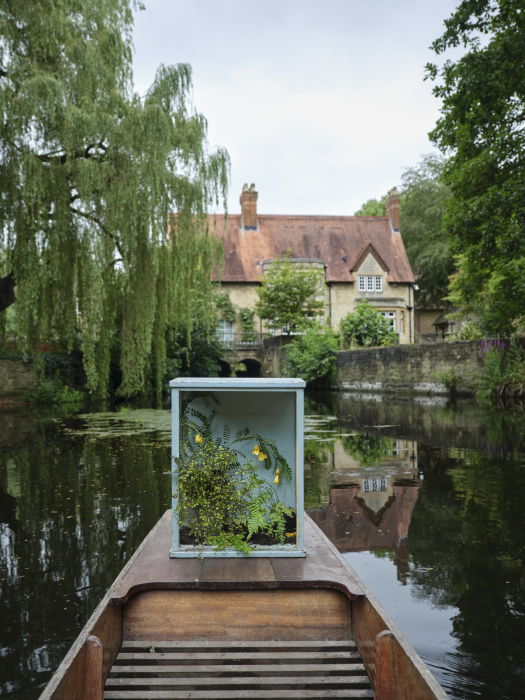
MARK SMITH & FELICITY JONES Kōwhai, Oxford, England 27.07.23 2023 from Case Studies III (2024) Inkjet print on cotton rag, 950 x 712 mm.
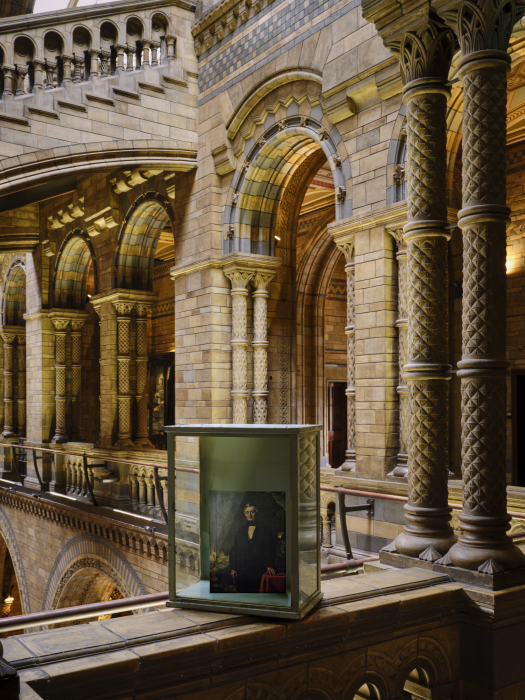
MARK SMITH & FELICITY JONES Portrait of Nathaniel Bagshaw Ward, Natural History Museum, London, England 08.08.23 2023 from Case Studies III (2024) Inkjet print on cotton rag, 950 x 712 mm.
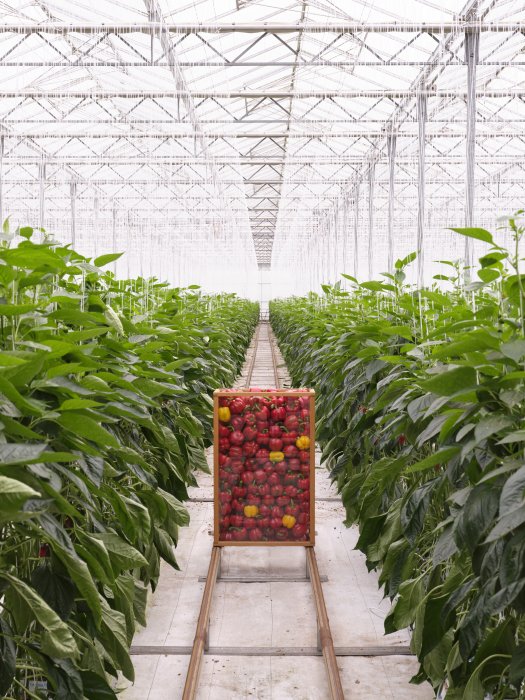
MARK SMITH & FELICITY JONES Commercial Glasshouse, Waiuku 2022 Inkjet print on cotton rag, 950 x 712 mm.
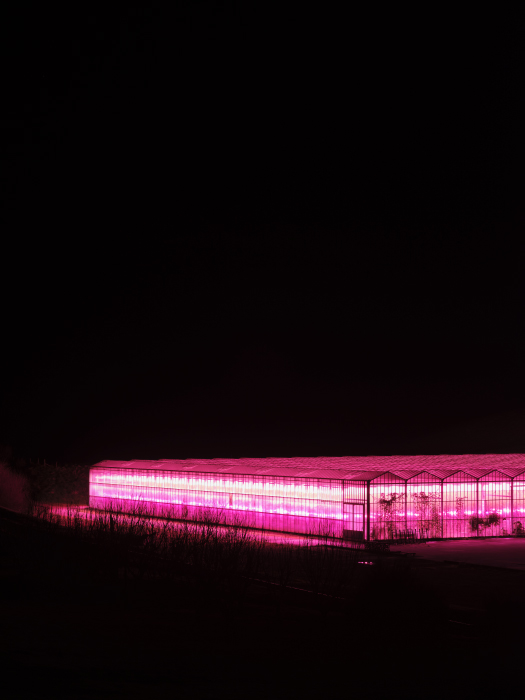
MARK SMITH & FELICITY JONES Commercial Glass House, near Taupo 2022 Inkjet print on cotton rag, 950 x 712 mm.