
Of Here
Photographs by Abhi Chinniah
BRANNAVAN GNANALINGAM
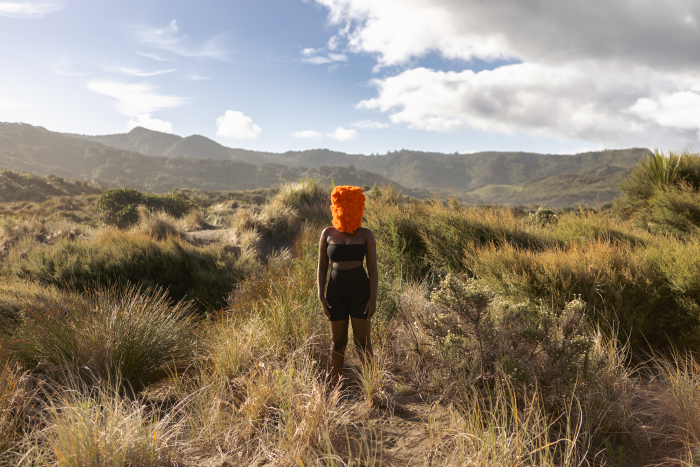
ABHI CHINNIAH Marigold Head 2023 Colour photograph
Most Sri Lankan Tamil families have sepia photos of their dead ancestors in the house. These photos are from a different era — a time when Tamils lived in Sri Lanka, before the Civil War and before the diaspora led to millions settling around the globe. In these photos, the gaze is unnerving, the grandparents and aunties and uncles unsmiling, inscrutable, direct to camera. What is notable about these photos is the lack of background, similar to a contemporary passport photograph.
Abhi Chinniah is a photographer born in Christchurch and currently living in Auckland. Her background, though, is more complex than that. Chinniah’s grandparents emigrated from Jaffna in Sri Lanka to the rubber estates in Malaysia. Her parents emigrated from there to Aotearoa New Zealand. After struggling for acceptance here, her parents emigrated back to Malaysia, while Chinniah, after spending some time in Malaysia, returned to Aotearoa. Chinniah is a self-taught and unconventional photographer, who has, in a relatively short time, built strong connections with South Asian and South-East Asian artistic communities here.
Her images explore the complexity of being a brown or black immigrant and finding roots in another country (or countries), far from your own. This includes lands where there are difficult histories already.
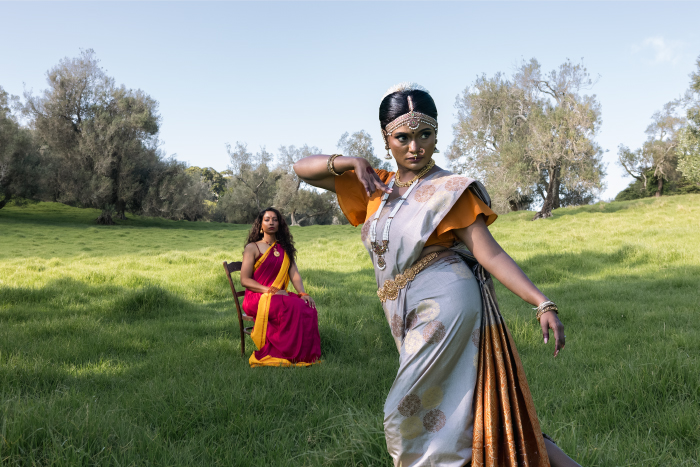
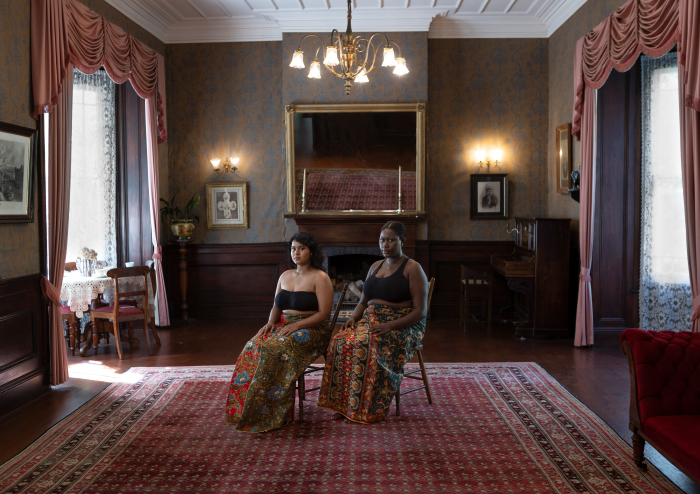
What is striking here is the gaze of the protagonists—off into the distance, or at you, seemingly indifferent to the gaze back. Such faces do not typically feature in contemporary photography in this country, and if they do, there is generally a lack of agency in the images, both in terms of who takes the photograph and who is being photographed. Chinniah’s subjects show us a similar inscrutability—maybe even defiance—to the photos of Tamils’ ancestors. In doing so, there is a direct link to the generations that come before in her work. It creates an unusual sense of being simultaneously nostalgic and future- looking.
Yet, the subtle differences are also striking. The subjects are firmly of here, embedded within a post-colonial landscape. They sit within the meadows, shorn hills and introduced trees of Aotearoa; they take shelter and struggle, like everybody else on this land. They are also dressed in outfits that demonstrate their histories and pasts— the colours and the patterns create a clear sense of agency. In Radhika, the subject is wearing their mother-in-law’s striking sari in among the long grass. In Marigold Head, the subject becomes less personalised through symbolism, drawing strong links to the subject’s ancestors. This is perhaps Chinniah’s most political point—that despite the fraught currents of immigration, war and British colonialism, in twenty-first-century New Zealand, Asian and African subjects also exist in these landscapes, and have done so for generations.
Published in issue 188 Summer 2023-24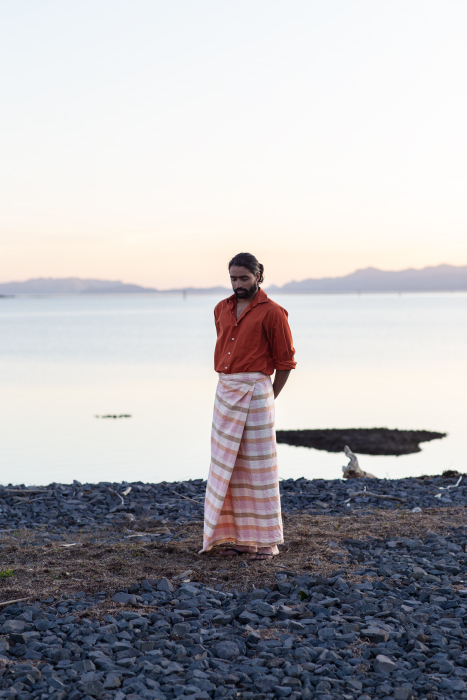
ABHI CHINNIAH Mithran 2023 Colour photograph
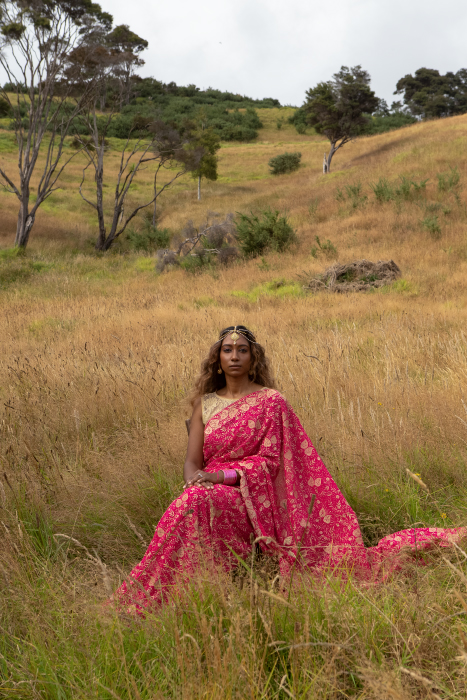
ABHI CHINNIAH Radhika 2023 Colour photograph
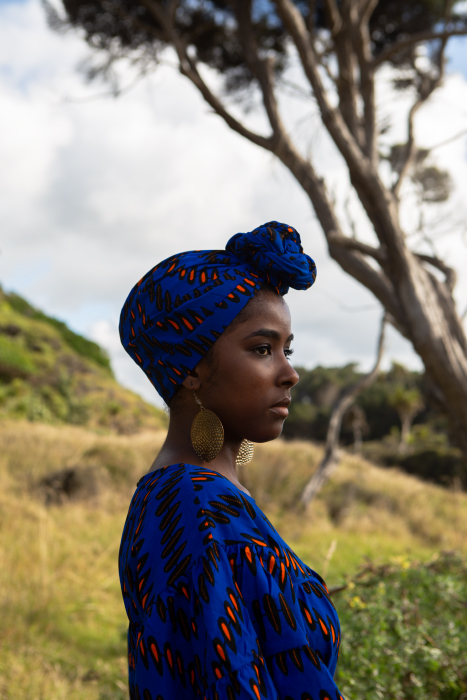
ABHI CHINNIAH Fatumata 2023 Colour photograph
ABHI CHINNIAH Soph 2023 Colour photograph
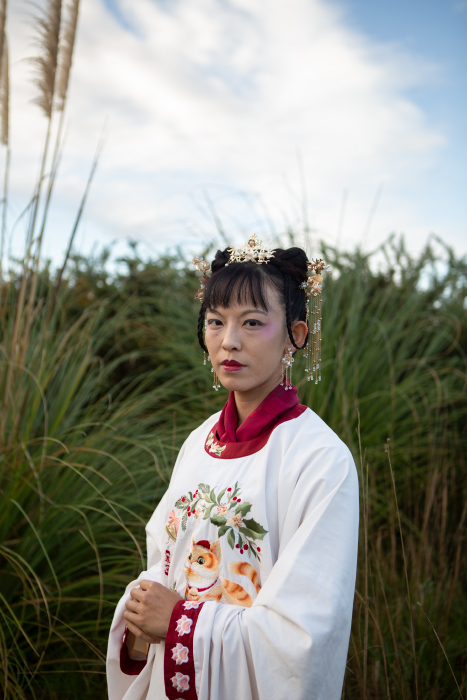
ABHI CHINNIAH The Batik Sisters 2023 Colour photograph
ABHI CHINNIAH The Dancer 2023 Colour photograph
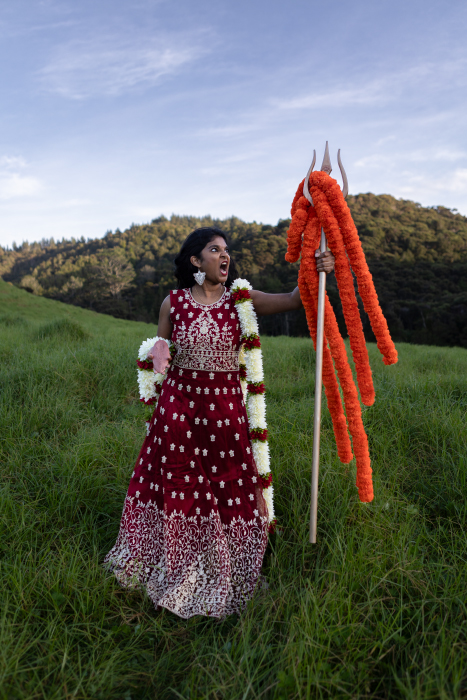
ABHI CHINNIAH Act II 2023 Colour photograph