
Book review
Super Realism by Edward Lucie-Smith
Published by Phaidon, Oxford, 1979
Reviewed by ANDREW MARTIN
Edward Lucie-Smith, indefatigable chronicler of the highways and by-ways of contemporary art, has turned his gaze to an area that is now almost as controversial in New Zealand as it has been overseas since its modern incarnation in the late 'sixties. Super Realism, like many innovations, has had to fight for a hearing as fair as the one Lucie-Smith gives it in this book.
There is something of the siege mentality at work here. One often feels that the writer is trying very hard to persuade us to like the work we see reproduced in Super Realism. As far as this aim goes, the book succeeds. If he does not try harder to meet the aesthetic arguments advanced against the movement, it may be because his contentions in its favour are so convincing.
Lucie-Smith's account of the roots of Super Realism - from Jan van Eyck to the Conceptualists - is his most eloquently and eruditely presented theme. Fascinating examples of historical works which are more than just trompe l'oeil enliven these pages: Dionigi Bussola's The Canonisation of St Francis and Grinling Gibbons's Cravat could as easily have been produced today as three hundred years ago.
The other elements whose traces may be found in contemporary Super Realism are expounded upon with equal skill and readability. Pop art, photography, Minimalism and 'twenties American Precisionism are all developments which had important parts to play.
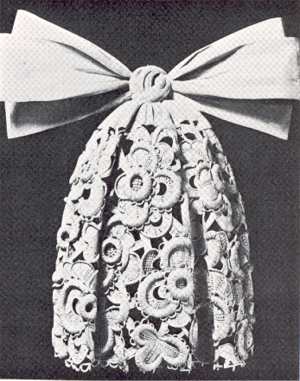
GRINLING GIBBONS
Cravat c1700
limewood
Super Realism, in Lucie-Smith's view, is largely a Modernist art form. This is exemplified by the attitude which many of the founders of the movement have toward the surface of the canvas, and the priority of what happens there over what is shown there. The vexing question of subject matter; for instance, is somewhat begged by Michael Morley's method of creating his large paintings. The photographs from which he works are divided into squares which he copies, one at a time, on to his canvas. All squares except the one on which he is working are blocked out and that square is transferred with the image upside-down. As Lucie-Smith points out, this disregard for the eponymous subject of the painting is paralleled by the Conceptualists' assertion that 'the process of making art took primacy over the finished article.'
Diversity within the movement is well comprehended by the book. Many Super Realists, in contrast to Morley, place great emphasis on subject matter. As Lucie-Smith says: 'The vaunted neutrality of the style very often. . . allows the subject matter great weight' A Super Realist work, the book seems to suggest, needs to be looked at twice: once for the style and a second time for the subject. And both may be considered quite separately.
Another of the book's strong points is the expansion of the discussion to include European Super Realist art. Examples from Italy, Spain and Sweden attest to the fact that the 'style' (if that word is comprehensive enough) has spread from the United States and England, where it began, to become a truly international movement.
If the text is short, the abundance of fact and mature thought which it contains make Edward Lucie-Smith's Super Realism the definitive introduction to a still difficult subject.