
Arrivals and Departures: The Directorship of the Court Theatre, Christchurch
HOWARD McNAUGHTON
Nearly four years ago, Elric Hooper resettled in New Zealand and committed his very substantial talents and training to revitalising the local theatre. Since then, he has worked as actor, director, teacher, and lecturer. His abilities as provocateur have demonstrably sharpened the artistry and integrity of theatre people throughout the country.: even when his plain speaking has been interpreted as insult. It was a refreshingly controversial turn of events when The Court Theatre appointed Elric Hooper to succeed Randell Wackrow as Artistic Director.
There are enormous differences between the two men. Wackrow is a theatrical pioneer - the complete auto-didact - in the most heroic sense. With Mary Amoore, he founded Central Theatre in Auckland; and moved on just when it looked to be reaching its first maturity. At The Court, his role has been similar. He joined the two-year-old theatre in 1973 as Business Manager - its first full-time employee. Actors were until then paid at purely token rates, the theatre building was primitive, uncomfortable, and poorly-equipped, and the accounts were very confused; the early directors, Yvette Bromley and Mervyn Thompson, had put most of their considerable energies into artistic development. Wackrow spent his early years at The Court creating a stable administrative foundation. This achieved, he became co-Director with Yvette Bromley, and on her retirement, sole Director.
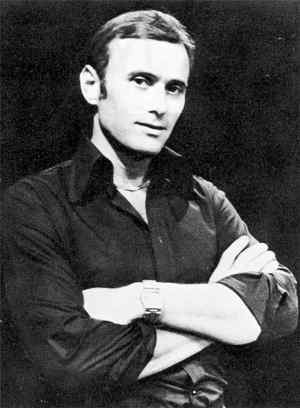
Elric Hooper
In 1978, Chris Mangin's work as Production Manager has allowed Wackrow more time for artistic direction: but he has remained the managerial pivot of the theatre. Among numerous administrative achievements, he has developed the acting company from three in 1974 to thirteen in 1978; he has taken the theatre into its first properly-constructed auditorium complex (in the old university); and he has managed the finances so ably that in each year until 1978 his books have shown a small profit.
Wackrow does not believe in taking unnecessary risks, and he has been criticised for this: but on the other hand he is leaving a theatre with a sense of security, and in so doing has greatly restored the credibility of professional theatre in a city where the 1967 collapse of the Canterbury Theatre Company has not been forgotten. Wackrow's special abilities are mainly in physical areas: he has developed The Court to its concrete maturity, and he passes on the work of refinement to a specialist.
Elric Hooper is an actor with a considerable diversity of European Experience - so much so, that he has been an obvious embarrassment to various theatre administrations in which he has recently worked in subordinate capacities. Few New Zealand directors can cope with an actor-director-designer who argues from personal experience with Littlewood, Zeffirelli, and the Berliner Ensemble; who has a good university degree supported by theatre training and prolific reading; and whose knowledge of production economics ranges from local student productions to a long period in Oh! Calcutta! He is a man who seems best suited for one of the top jobs, and it only remains to be seen whether his capacity for personnel management equals his expertise in other areas.
In the last few years, Hooper has worked very hard indeed. In Christchurch alone, he has directed (and usually also designed) The Game of Love and Chance, The Parliament of Women, The Importance of Being Earnest, The School for Scandal, Measure for Measure, Othello, Romeo and Juliet, and Gluck's Orfeo et Euridice, to list just the major achievements. He has also acted at least a dozen lead roles. At The Court, he plans to direct about six plays in 1979, and to continue acting and set designing. Such a commitment would be impossible were it not for the appointment of Chris Mangin to the new position of Administrator, relieving some of the pressure that Wackrow bore: but the fact remains that The Court's new Director represents an energy input that will supercharge the whole theatre.
The programme will change substantially. Recently, Randell Wackrow has become increasingly committed to wide-audience plays, especially comedy and straightforward narrative drama. His own major productions in the new theatre have been Hadrian VII, Glide Time, The Lion in Winter, The Wind in the Branches of the Sassafras, and Cinderella, with Yvette Bromley and Bryan Aitken directing most of the more elitist scripts. Late-night and lunch-hour programmes have been adventurous: but generally have not drawn audiences.
Elric Hooper envisages seasons of thematically-related plays of varying audience appeal. 1979 will start with five 'Marriage' plays: major seasons of Middle Age Spread, The Country Wife, and Mothers and Fathers; linked by two-week seasons of Rudkin's Ashes and Strindberg's Dance of Death. Then will come a five-week Beckett festival, and the Winter season, on another theme. Such coordinated planning will please actors as much as administrators: actors will be employed knowing that they can expect 'at least three peachy parts each season', and the atmosphere will inevitably become much more purposeful. Too often, artistic policy at The Court seems to have evolved on an ad hoc basis.
Whether such forward planning can be fully realised remains to be seen. Wackrow's impediments have included long negotiations over script rights, and the uncertain potential of newly-hired actors. (Partially he solved the first in 1977 by meeting agents in Britain.) Hooper, of course, has plenty of international contacts; he is very sure of himself as a talent scout; and he intends revitalising actor training at The Court, with the help of overseas specialists.
One would suspect a basic variance in the two director's philosophies of theatre. Putting it crudely, Wackrow became more and more concerned with entertainment - a priority which makes a new London farce 'hot property'. Hooper's basic belief seems to be in education. Both of his new theatre trainees are coming from the university. Even the most experienced actors will participate in the training programme, as teachers and as students. Above all, audiences will be educated systematically, to respond to a wider variety of theatre in more depth; visiting specialists will give public seminars so that, for example, most of the Country Wife audiences will already be conversant with the principles of Restoration drama.
Both men agree that the nature of the Court audience is changing. Hooper speaks of the old prejudice that 'theatre-going is just for posh people': so that audiences sold themselves short in terms of their own sensitivity and response. Wackrow compares the change in entertainment habits with the widespread introduction of wine with meals - something unheard-of in the average family a decade ago. The wine-drinker theatre-goer now has a bar at The Court; and the appropriate concomitants in terms of bourgeois comforts. As an inner-city nite-spot The Court should be able to rival the James Hay Theatre, except in the vital terms of scale: no intimate theatre can console the herd instinct after the manner of the big proscenium theatres which still abound in Christchurch.
In every way, it would be beneficial for The Court's box-office successes to transfer briefly to the James Hay Theatre. In particular, Hooper points to its implications in terms of acting habits: 'If you act in a small theatre for too long, your acting becomes small, your range becomes that of Jane Austen rather than of Tolstoy'. If the transfers work economically, the way seems clear for the realisation of Elric Hooper's biggest plan for The Court: the construction of a second, studio auditorium in which more experimental work may be done, and in which The Court may breed directors, 'the rarest animals in our theatre'.